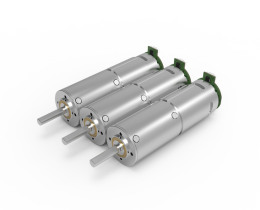


Looking for a suitable motor?

小编
Published2025-10-15
Absolutely! Here's a compelling and attractive soft article on "Components of a Servo Motor," divided into two parts for your convenience.

Introduction: Unveiling the Heart of Precision Motion—The Servo Motor
In the realm of automation, robotics, and precision machinery, the servo motor stands as a symbol of meticulous control and reliable performance. Whether in a robotic arm on an assembly line, a camera autofocus system, or advanced aircraft controls, servo motors are the magic behind seamless movement and accuracy. But what makes these marvels of engineering so capable? The secret lies within their intricately designed components, each playing a vital role in orchestrating perfect motion.
The Core Components of a Servo Motor
At first glance, a servo motor might seem like a simple electric motor. However, beneath that unassuming exterior lies a finely tuned ensemble of parts working harmoniously. The fundamental components include:
Motor (usually DC or BLDC) Geartrain Feedback Device (Potentiometer, Encoder, or Resolver) Controller/Electronic Circuitry Power Supply Interface
Let’s break down each element and understand how they contribute to the servo's operation.
The Motor: The Heart of the System
The motor is the core actuator responsible for generating the rotational movement. Most servo motors use DC motors for their simplicity and ease of control, but brushless DC motors (BLDC) are increasingly popular due to their efficiency and longevity. These motors convert electrical energy into mechanical rotation, providing the fundamental motion that the servo system aims to control.
DC Motors: Known for their straightforward design, DC motors have brushes that commutate the current. They are cost-effective but require maintenance and have shorter lifespan compared to brushless variants. Brushless DC Motors: Eliminating brushes, these motors offer greater efficiency, less maintenance, and better performance at high speeds, making them ideal for high-precision servo applications.
Geartrain: The Power Multiplier
A servo motor's raw rotational force or torque isn't always suitable for direct application, especially in tasks requiring high precision and force. This is where the geartrain comes in—a series of gears seamlessly integrated to modify the motor's output.
Types of Gear Trains: Spur gears, planetary gears, harmonic drives—each selected based on desired speed reduction, torque multiplication, and size constraints. Purpose: Geartrains serve two primary functions; they amplify torque while reducing speed, enabling precise control over the position, speed, and acceleration of the servo output.
Feedback Devices: The Eyes of the System
One key to the servo motor's exceptional accuracy is the feedback device. This component continuously measures the position, velocity, and sometimes torque, feeding this information back to the controller to make real-time adjustments.
Potentiometers: Typically used in basic servos, they provide analog feedback on the shaft’s position. These are simple but less precise and more susceptible to wear. Encoders: More advanced, encoders generate digital signals representing position and speed. They are highly accurate and durable, essential for motion control in complex applications. Resolvers: Robust devices that work well in harsh environments, providing continuous analog feedback for high-speed or high-temperature conditions.
Control Circuitry: The Brain of the System
The control circuitry interprets the feedback signals and compares them with the desired command signals. Based on the deviation, it adjusts the power supplied to the motor, ensuring smooth, accurate motion.
Amplifiers and Drivers: Convert low-power control signals into high-current signals needed for the motor. Microcontrollers or Integrated Circuits: Execute algorithms that process feedback data, implement PID control loops, and generate pulse-width modulation (PWM) signals to regulate motor power precisely.
Power Supply Interface: The Energy Provider
A stable and reliable power source feeds the servo motor, ensuring consistent operation. Power requirements vary depending on the motor size, load, and application, and proper power management is critical for performance and longevity.
Deep Dive into Component Interaction and Advanced Insights
Interaction of Components: The Symphony of Motion
Imagine a symphony orchestra: each instrument must play its part harmoniously for the music to be flawless. Similarly, in a servo motor, the motor, geartrain, feedback device, and control circuitry work together seamlessly.
The control circuit sends a command to the motor, dictating the desired position or speed. The motor responds, turning the geartrain which translates this rotation into the output shaft movement. Simultaneously, the feedback device measures the actual position and sends this data back. The control circuitry compares the actual data with the command, adjusting the power input to the motor. This feedback loop is continuous, enabling real-time correction and remarkable precision.
This interplay allows the servo to perform rapid, accurate movements—whether it's positioning a robotic arm within fractions of a degree or rotating a camera lens swiftly and precisely.
Advanced Components and Innovations
Modern servo motors incorporate higher sophistication in their components, enhancing performance and durability:
Sensorless Feedback: Some advanced systems eliminate physical feedback devices, using back-EMF (electromotive force) signals for position estimation—streamlining design and reducing costs. Integrated Drives: Many servo motors now come with built-in electronic drives, consolidating components for compactness and improved efficiency. High-Performance Gear Trains: Harmonic drives and strain wave gears offer near-zero backlash and high gear ratios in a compact form, perfect for delicate applications demanding precision.
Applications and Impact
Understanding these components isn't just academic; it reveals the ingenuity behind countless devices operating around us. From robotic surgery tools demanding micrometer accuracy to drone aerial cameras adjusting flawlessly mid-flight—servo motors are the unseen heroes driving the future of automation.
Closing Thoughts: The Power Behind the Motion
Diving into the components of a servo motor unveils a marvel of engineering—each part meticulously designed to achieve the impossible: precise, fast, and reliable control of motion. Whether in a simple hobbyist project or a complex aerospace system, understanding these parts empowers users and engineers to innovate further, push boundaries, and create smarter machines.
Kpower has delivered professional drive system solutions to over 500 enterprise clients globally with products covering various fields such as Smart Home Systems, Automatic Electronics, Robotics, Precision Agriculture, Drones, and Industrial Automation.
Update:2025-10-15
Contact Kpower's product specialist to recommend suitable motor or gearbox for your product.