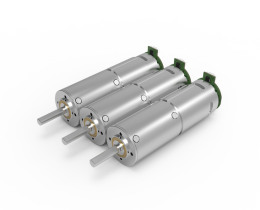


Looking for a suitable motor?

小编
Published2025-10-15
In the rapidly evolving world of industrial automation, achieving exact precision while maintaining safety and reliability is paramount. Amidst a landscape filled with complex machinery and demanding operational standards, one innovation stands out for its blend of sophistication and utility—the servo motor brake system. Often overlooked, this vital component plays a crucial role in enabling machines to perform flawlessly, ensuring both performance excellence and safety compliance.
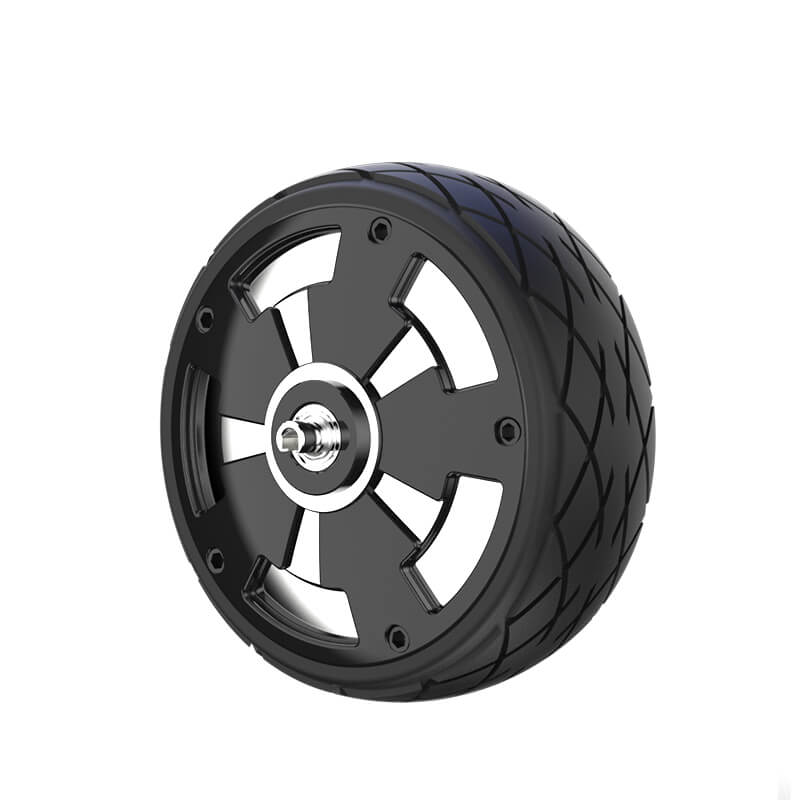
What is a Servo Motor Brake System?
At its core, a servo motor brake system combines a servo motor with an integrated or dedicated braking mechanism. The servo motor, renowned for its ability to deliver precise control of angular or linear position, velocity, and torque, is central to automation tasks such as robotics, CNC machinery, and conveyor systems. The brake system enhances the servo motor's capabilities by providing a reliable method of holding or stopping motion whenever needed.
The brake component, typically a disc or drum brake, is electronically controlled and activated by the servo motor’s control system. When the system detects a need to halt motion—whether during routine operation, safety shutdown, or emergency stop—the brake engages quickly and holds the load securely in place. This seamless coordination between the servo motor and brake ensures the machinery operates with high accuracy, safety, and dependability.
Why Are Servo Motor Brake Systems Essential?
In many industrial processes, the ability to control motion is not just about moving parts from point A to B—it involves precise stopping, holding, and releasing at critical moments. For example, robotic arms working on delicate assembly tasks must hold components precisely during inspection or welding, and conveyor belts transporting sensitive items require secure stopping right at designated positions. Any deviation or delay can lead to product damage, safety hazards, or costly downtime.
Servo motor brake systems address these challenges head-on. They provide instantaneous force application, preventing unwanted movement due to inertia, gravity, or external forces. This level of control is especially vital in applications involving heavy loads, high speeds, or safety-critical operations, such as aerospace manufacturing, medical equipment, and automotive assembly lines.
Anatomy of a Servo Motor Brake System
A typical servo motor brake system comprises several key components:
Servo Motor: The heart of the system, responsible for precise motion control. Equipped with encoders and advanced control algorithms, it ensures accurate positioning and smooth operation.
Brake Mechanism: Usually an electromagnetic or spring-applied brake, designed to engage or disengage swiftly and reliably. These brakes can be disc, drum, or shoes depending on application requirements.
Control Module: The brain that manages the coordination between the servo motor and brake. It interprets signals from sensors, command inputs, or safety systems to activate or release the brake exactly when needed.
Power Supply & Actuators: Power sources that energize the brake and motor, often integrated with safety circuits for fail-safe operation.
The sleek integration of these components results in a system capable of delivering precise, repeatable motion with a high level of safety assurance.
Benefits of Using a Servo Motor Brake System
The deployment of servo motor brake systems offers numerous advantages across varied industries:
Enhanced Safety: When power is cut or in case of system failure, brakes automatically engage to hold the machinery in a safe state, preventing accidents and injuries.
High Precision Positioning: Brake systems hold loads in place with minimal drift, crucial for processes like laser cutting or micro-assembly, where even minor deviations can compromise quality.
Rapid Response & Re-engagement: Modern brake systems are designed for quick engagement and release, minimizing downtime and increasing throughput.
Energy Efficiency: Electromagnetic brakes consume power only during engagement or release, reducing energy costs compared to traditional mechanical brakes.
Reduced Mechanical Wear: By employing electromagnetic or spring-loaded brakes, maintenance requirements are decreased, and system longevity is increased.
Versatility: Suitable for a vast array of applications—from small servo-driven instruments to large industrial robots and material handling systems.
Applications in Modern Industry
Servo motor brake systems have become indispensable in several high-stakes sectors:
Robotics: Precise control of robotic arms during assembly or welding, with brakes ensuring holding positions without slippage.
CNC Machinery: Accurate stopping and holding of CNC tools to maintain tolerances and prevent unintended motion.
Automated Material Handling: Secure stopping of conveyors, cranes, and lifts, ensuring safe and orderly movement of goods.
Medical Equipment: Critical positioning in imaging devices, laboratory automation, and robotic surgeries, where safety and precision are paramount.
Aerospace and Defense: Handling delicate components or missile control systems requiring absolute positional accuracy and fail-safe brakes.
Innovations and Future Trends
As industry standards evolve towards smarter, more integrated systems, servo motor brake technology is advancing rapidly:
Smart Brakes: Incorporating sensors and IoT connectivity for real-time status monitoring and predictive maintenance.
Wireless Control: Eliminating wiring complexities, enabling more flexible installation and reconfiguration.
Energy-Regenerative Brakes: Creating systems that recover energy during braking, contributing to overall energy savings.
Hybrid Systems: Combining electromagnetic brakes with mechanical elements for enhanced performance in extreme environments.
Challenges and Considerations
Despite their benefits, deploying servo motor brake systems requires thoughtful consideration. Factors such as brake size, response time, load capacity, environmental conditions, and maintenance must be carefully evaluated. Compatibility with existing control systems and ensuring fail-safe operation under power outages or faults are critical to system integrity.
Choosing the right brake type—spring-applied, electromagnetic, or a combination—depends on the specific application requirements, desired response characteristics, and safety standards.
Leveraging innovations in modular drive technology, Kpower integrates high-performance motors, precision reducers, and multi-protocol control systems to provide efficient and customized smart drive system solutions.
Update:2025-10-15
Contact Kpower's product specialist to recommend suitable motor or gearbox for your product.