

Looking for a suitable motor?

小编
Published2025-10-15
Unlocking Precision: An In-Depth Look at the Key Parts of a Servo Motor
Servo motors are sophisticated devices that serve as the backbone of automation, robotics, and precision control systems. From controlling the movement of robotic arms to maintaining stability in aerospace applications, servo motors exhibit a level of precision and reliability that makes them invaluable. To fully appreciate their capabilities, it’s essential to understand what makes these compact powerhouses tick — the individual parts that work in perfect harmony to produce accurate motion.

The Heart of the System: The Rotor
At the core of every servo motor lies the rotor, often referred to as the armature in certain contexts. The rotor is the moving part of the motor that rotates to produce motion, serving as the primary interface with the mechanical system it drives. Constructed from laminated steel or other magnetic materials, the rotor houses windings or permanent magnets depending on the motor type — brushless or brushed.
In brushless servo motors, which are increasingly popular due to their efficiency and low maintenance, the rotor contains permanent magnets. This design reduces wear and tear and allows for smoother, more reliable operation. Conversely, traditional brushed motors have windings on the rotor, with brushes providing electrical contact. Regardless of the design, the rotor's role is to respond to the electromagnetic forces generated during operation, translating electrical signals into precise rotational movement.
The Stator: The Magnetic Backbone
Encasing the rotor is the stator—the stationary part responsible for producing a steady magnetic field necessary for rotational motion. It is equipped with windings or coils, meticulously wound to generate a magnetic flux when energized by a control signal. The arrangement of these coils, often in a specific pattern called a winding configuration, determines the smoothness and accuracy of the motor’s response.
In high-performance servo motors, the stator is engineered with intricate copper windings, designed to produce strong and consistent magnetic fields. These magnetic fields interact with the rotor's magnets or windings, creating torque that causes precise rotation. The stator's design is fundamental in achieving position accuracy, speed control, and torque—characteristics critical in high-precision applications.
The Feedback System: Encoders and Sensors
One of the defining features of a servo motor is its ability to precisely control position, which it accomplishes through feedback mechanisms. At the heart of this process are encoders or sensors installed on the motor shaft. These devices continuously monitor the rotor’s position, providing real-time data to the control system.
Encoders come in various forms, such as optical, magnetic, or Hall effect sensors. Optical encoders, for instance, use a light source and photodetectors to translate shaft rotation into digital signals, giving precise positional information down to fractions of a degree. This feedback loop allows the servo controller to make instant adjustments to the motor's input, ensuring accurate positioning even under varying load or environmental conditions.
The Commutator and Brushes
In brushed servo motors, a key component is the commutator—a rotary switch that periodically reverses current direction within the windings, maintaining continuous torque in a single rotational direction. Brushes, typically made of carbon or graphite, maintain electrical contact with the commutator, supplying power to the windings.
While brushed motors are simpler and cost-effective, their brushes wear over time, necessitating maintenance or replacement. The design of the commutator and brushes significantly influences the motor’s efficiency, noise levels, and lifespan.
In contrast, brushless servo motors eliminate these components altogether, employing electronic commutation. This advancement results in reduced maintenance, increased durability, and quieter operation—a trend increasingly prevalent in today's servo motor applications.
The Drive Electronics: The Motor Controller
Although not a physical part of the motor itself, the drive electronics or motor controller play a crucial role in the operation of a servo motor. These electronic devices interpret commands from the control system and deliver appropriate electrical signals to the stator coils or the commutator system in brushed variants.
The servo drive modulates voltage, current, and frequency to optimize torque, speed, and position. It also processes feedback signals from encoders, making real-time adjustments to keep the motor's operation aligned with command inputs. Modern servo drives often include sophisticated algorithms, such as PID (Proportional-Integral-Derivative) control, to finely tune motor responses.
Additional Components: Bearings, Cables, and Housings
Beyond the primary electrical and magnetic components, several mechanical parts ensure the motor’s longevity and smooth operation. Bearings support the rotor, reducing friction and allowing it to spin freely with minimal wear. Precision bearings are especially critical in high-performance servo motors, where even minute friction can影响 control accuracy.
Cabling and connectors link the motor to its drive electronics, facilitating power transfer and signal communication. Properly designed housings and cooling systems protect internal components from dust, moisture, and overheating, which can impair performance or cause failure.
This overview of the major parts of a servo motor highlights the intricate design and engineering that enables these devices to perform with exceptional precision. By understanding each component’s role, engineers and hobbyists alike can better appreciate how servo motors are tailored for complex, demanding applications—making them the unsung heroes of modern automation.
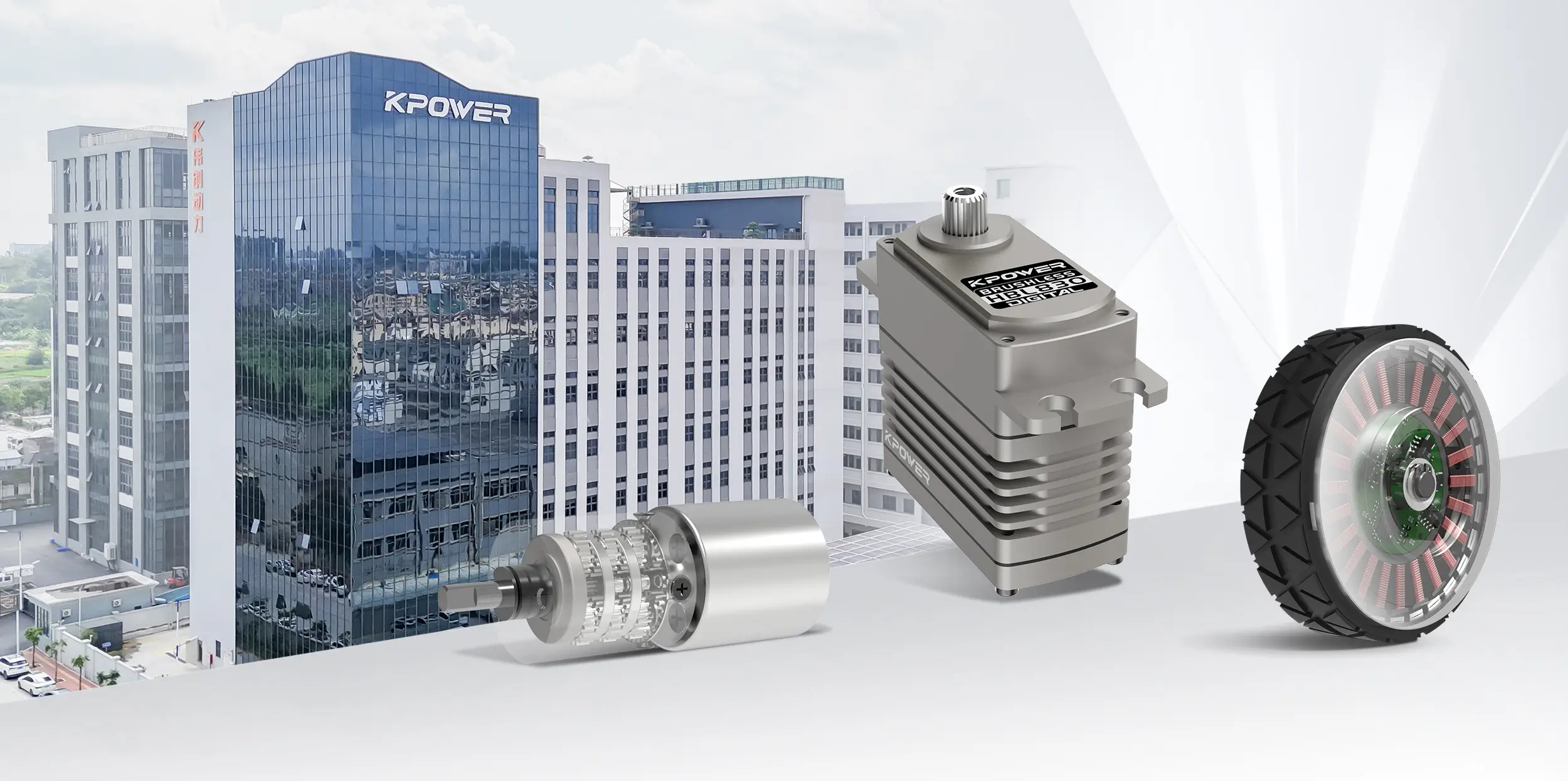
Established in 2005, Kpower has been dedicated to a professional compact motion unit manufacturer, headquartered in Dongguan, Guangdong Province, China.
Update:2025-10-15
Contact Kpower's product specialist to recommend suitable motor or gearbox for your product.