

Looking for a suitable motor?

小编
Published2025-10-15
In the realm of industrial automation and robotics, precision, safety, and reliability are not just desirable—they are imperative. As industries evolve and demand more sophisticated control of machinery, the components powering these systems must keep pace. Enter the servo motor with brake—a harmonious blend of dynamic motion capabilities and secure holding power that unlocks new levels of performance in automation.
A servo motor, at its core, is a rotary actuator that allows for precise control of angular position, velocity, and acceleration. Unlike standard motors that simply run forward or backward, servo motors are equipped with feedback systems—most commonly encoders—that constantly monitor and adjust motion parameters, ensuring each movement is extremely accurate. This control precision makes them a favorite in CNC machines, robotics, conveyor systems, and many more applications that require exact positioning.
However, what happens when these powerful motors need to hold a position for an extended period without drifting? This is where the addition of a brake mechanism becomes vital. A servo motor with brake integrates a braking system directly into the motor assembly or as a separate, linked component. This configuration ensures that when the motor is powered down or needs to hold a position against external forces, it does so securely and efficiently.
The brake component functions like a locking mechanism—a physical barrier that prevents movement when engaged. It can be electromagnetic, disc, drum, or spring-applied, depending on the application’s specific needs. The integration of brakes with servo motors offers several advantages: it increases safety by preventing unintentional movements, enhances energy efficiency by holding positions without continuous power, and increases control for complex tasks requiring holding or rapid release.
One of the key features that make servo motors with brakes so attractive is their ability to deliver both dynamic performance and static holding. For example, during the operation of a robotic arm, the servo motor can precisely position the arm for welding or assembly tasks. Once the position is reached, the brake can lock the arm in place, ensuring stability even if power is lost or external forces act upon it. When movement is required again, the brake disengages, and the servo motor resumes control—offering flexible, safe, and reliable operation.
Another critical aspect is the seamless integration of brake systems into the servo motor’s design. Modern servo motors are equipped with specialized mounting options or built-in brake assemblies. The brake’s activation and release are often controlled via the same programmable logic controllers (PLCs) that manage the servo's movement, simplifying integration and improving response times.
Safety is arguably the most compelling reason to incorporate brakes into servo motor systems. In applications where human interaction is involved—such as collaborative robots or medical equipment—the ability to quickly lock or release movement can prevent accidents and ensure operator safety. In heavy machinery, brakes prevent unexpected motion during maintenance or power outages. The instant engagement of brakes also adds to the precision in applications like 3D printing and laser cutting, where even minimal movement deviation could ruin a project.
Efficiency is another important benefit. Traditional systems may require continuous power to hold a position, consuming significant energy and generating heat. In contrast, servo motors with brakes can hold a position with the brake engaged, requiring power only during movement or when disengaged. This energy-saving characteristic can lead to lower operational costs and environmental benefits—especially critical in large-scale industrial settings.
Manufacturers have responded to the growing demand for servo motors with brakes by developing a variety of models tailored to specific industries. For example, in packaging and material handling, servo motors with dynamic braking systems can rapidly stop and hold containers in position. In wind turbines and heavy lifting equipment, robust braking systems provide both safety and environmental resilience under adverse conditions.
In conclusion, the marriage of servo motors with braking mechanisms signifies a leap towards smarter, safer, and more efficient automation. They empower machines with unerring precision, reliable stopping power, and enhanced safety features that adapt effortlessly across a spectrum of demanding applications. As industries continue to push the limits of automation, the importance of these systems will only grow—delivering the control, safety, and performance needed to shape the factories and machines of tomorrow.
When you're ready, I can prepare the second part, which will delve into advanced applications, technological innovations, and future trends.
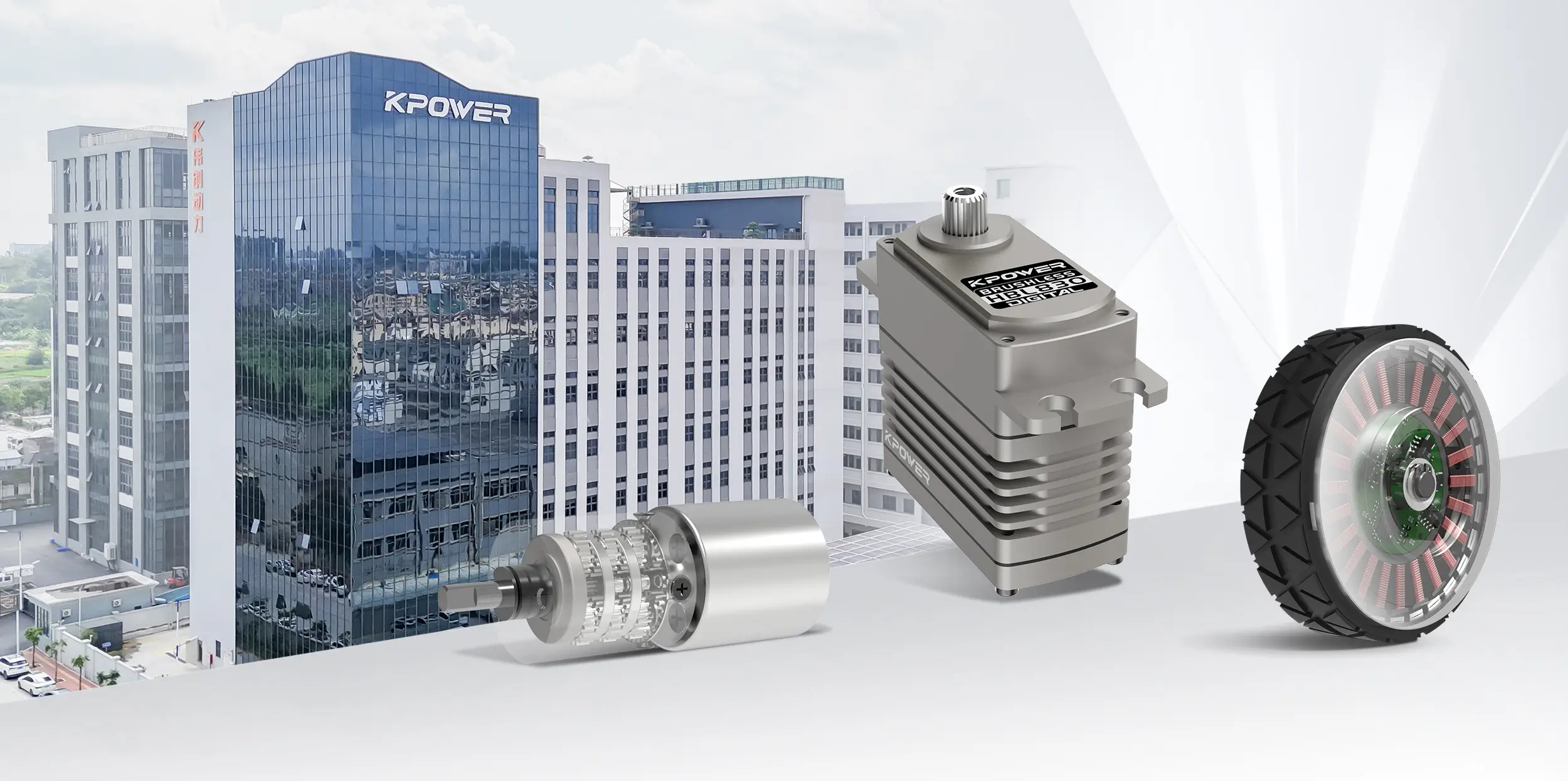
Established in 2005, Kpower has been dedicated to a professional compact motion unit manufacturer, headquartered in Dongguan, Guangdong Province, China.
Update:2025-10-15
Contact Kpower's product specialist to recommend suitable motor or gearbox for your product.