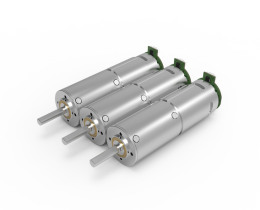


Looking for a suitable motor?

小编
Published2025-10-15
Imagine a world where machines move with perfect precision, responding seamlessly to commands, whether in a robotic arm assembling electronics or an aircraft adjusting its control surfaces mid-flight. At the core of these marvels lies a remarkable device: the servo motor. Far from just a simple motor, a servo encapsulates a blend of electrical, mechanical, and electronic components working harmoniously to deliver precise control over position, speed, and torque.
.webp)
Understanding how a servo motor works begins with demystifying its fundamental purpose. Unlike conventional motors, which simply rotate when electricity flows through them, servo motors are engineered for accuracy and responsiveness. They are integral to systems where precise angular positioning is paramount—think of robotic arms in manufacturing, camera autofocus mechanisms, or model airplane controls.
The core idea behind a servo motor is simple: it acts as a highly controllable actuator. But the magic lies in how it interprets control signals, adjusts its position, and maintains stability in dynamic environments. At its heart, a servo motor consists of a small DC motor, a gear train, a feedback device often in the form of an encoder or potentiometer, and a control circuit that orchestrates all these parts.
Let’s unpack this complex yet elegant orchestra. First, the control signal—often a pulse width modulation (PWM) signal—comes from a microcontroller or an electronic device. This signal encodes the desired position of the servo shaft. Think of it as giving the servo a target—a specific angle it must reach. The control circuit then processes this command, comparing it against the current position information provided by the feedback device.
Here’s where the real genius of the servo starts to unfold. The feedback device constantly measures the actual position of the shaft and sends this information back to the control circuit. This forms a closed-loop system, where the servo continuously "checks" if it has reached the target position. If there's a discrepancy, the control circuit adjusts the electric current flowing through the motor, nudging the shaft toward the desired angle.
When the control signal and feedback are in harmony, the servo maintains its position with remarkable stability, even against external forces trying to move it away from its set position. This ability to resist external disturbances and stay locked into a specific position makes servo motors ideal for high-precision applications.
One might wonder: how does the motor know which way to turn? The answer comes from the control algorithm embedded in the servo’s electronics. If the feedback indicates the shaft is behind the target, the control circuit energizes the motor in a direction that advances the shaft. Conversely, if the shaft has overshot or is ahead of the target, it moves in the opposite direction. This tug-of-war continues rapidly—often thousands of times per second—allowing the servo to quickly and accurately reach and hold the desired position.
The gear train plays a crucial role by converting the high-speed, low-torque rotation of the motor into a low-speed, high-torque movement required for precise positioning. It also makes the system more sensitive and easier to control. The gear ratio effectively amplifies the torque and slows down the movement, giving the system finer control over the output shaft.
Electronics are the brain of the servo, managing the feedback control loop. They interpret the PWM input, coordinate motor operation, and ensure stability and responsiveness. Modern servos utilize advanced motors—often brushless DC motors or coreless motors—to enhance efficiency and responsiveness.
In essence, a servo motor is a finely tuned system that converts an electrical control signal into precise mechanical movement, blending speed, torque, and positional accuracy into a compact package. Its ability to accelerate swiftly, hold positions against forces, and respond to commands with finesse makes it indispensable in applications demanding exact control.
By controlling the feedback loop and gear mechanisms, a servo can rotate to any angle within its limits, hold that position under varying loads, and adjust rapidly when needed—behaviors essential in robotics, aerospace, and automation.
In the next part, we’ll delve deeper into the types of servo motors, real-world applications, and some intriguing innovations that push the boundaries of what these tiny yet mighty devices can do. Buckle up—there’s much more to explore in the realm of servo mastery!
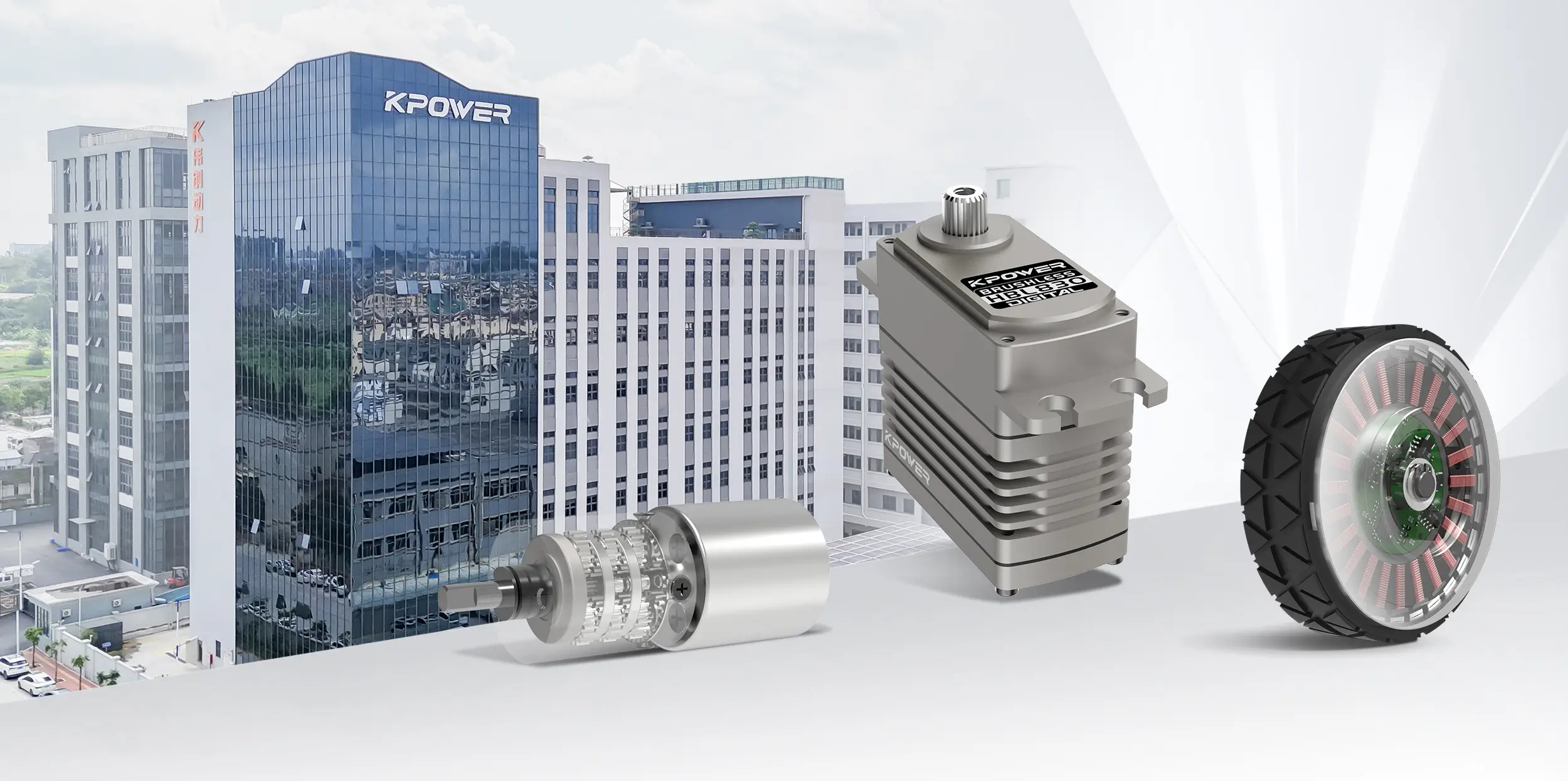
Established in 2005, Kpower has been dedicated to a professional compact motion unit manufacturer, headquartered in Dongguan, Guangdong Province, China.
Update:2025-10-15
Contact Kpower's product specialist to recommend suitable motor or gearbox for your product.