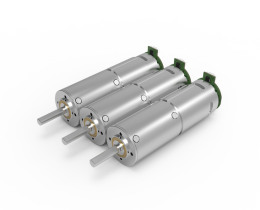


Looking for a suitable motor?

小编
Published2025-10-15
Sure! Here's the first part of the soft article based on your theme "why is my servo motor not working." I'll provide the second part afterward.

Imagine the moment when you’re all set to run your project, whether it’s a robot, a CNC machine, or an automated system, and suddenly, your servo motor refuses to cooperate. The motor that once hummed delicately, translating commands into precise movements, now sits silent or behaves unpredictably. If you’ve ever experienced this frustration, you’re not alone. Servo motors are marvels of engineering, but like all machinery, they can encounter issues that hinder their performance. Understanding why your servo might not be working requires a look into common causes, troubleshooting strategies, and a grasp of how these complex devices operate.
Understanding the Basics of Servo Motors
Before diving into solutions, it’s helpful to understand what makes a servo motor special. Unlike simple motors, servos are designed for precise control of angular position, velocity, and acceleration. They operate via a feedback loop that continually adjusts power based on the position sensor readings, ensuring that movements are accurate and repeatable.
Typical servo systems comprise a motor (usually DC or AC), a feedback device (like an encoder or potentiometer), a controller, and a driver or amplifier that supplies the current. When all these components work harmoniously, the servo motor performs its tasks seamlessly. But when something goes wrong, the entire system can falter.
Common Symptoms of a Non-Working Servo Motor
Pinpointing the issue begins with observing the symptoms:
The motor doesn’t respond to commands. It runs intermittently or unpredictably. Unusual noises like grinding, clicking, or humming. Overheating during operation. Error messages or alarms on the controller system. Excessive play or backlash in the movement.
Each symptom points to different potential causes—some electrical, others mechanical—so understanding these signs helps narrow down the root problem.
Electrical Troubles: The First Suspect
Electrical issues are frequently the primary cause of servo malfunction. These can stem from power supply problems, wiring faults, or faulty components.
Power Supply Problems: Servos require a stable voltage supply. Fluctuations, insufficient voltage, or over-voltage can lead to erratic behavior or complete failure. Check the voltage levels with a multimeter, ensuring they meet the servo’s specifications.
Wiring and Connections: Loose or damaged wires can interrupt current flow. Inspect all wiring terminals, connectors, and cables for signs of wear, corrosion, or disconnection. Secure any loosened connections and replace damaged cables.
Faulty Driver or Controller: The driver amplifies the control signals to the motor. If it’s defective—due to overheating, component failure, or manufacturing defect—the motor won’t receive proper signals. Replacing or resetting the driver may solve the issue.
Sensor Malfunctions: Feedback devices are integral to precise control. If an encoder or potentiometer malfunctions or disconnects, the servo might go into a safety lockout mode or behave erratically. Confirm sensor operation by checking signal integrity.
Mechanical Causes and Their Clues
If electrical checks turn up no issues, mechanical problems might be to blame.
Obstructions and Physical Jam: Debris, misaligned components, or worn-out gears can physically hinder movement. Carefully examine the entire assembly for obstructions or binding.
Worn Bearings or Gears: Over time, wear and tear can cause backlash, reduced precision, or complete failure. Replacing worn parts can restore smooth operation.
Overloading the Servo: Exceeding torque limits or demanding excessive loads can stress the motor, cause overheating, or trip safety mechanisms.
Environmental Factors: Excessively humid, dusty, or hot environments can affect motor components and sensors, leading to malfunctions.
Diagnosing the Issue: A Step-by-Step Approach
Visual Inspection: Start by thoroughly inspecting the entire system. Look for loose wires, signs of burn marks, corrosion, or physical damage.
Electrical Testing: Use a multimeter or oscilloscope to verify voltage levels and signal outputs. Confirm that the power supply and driver are functioning as expected.
Listen and Feel: Power on the system and observe motor behavior. Listen for unusual noises, vibrations, or hesitations.
Test the Feedback Device: Ensure the sensor (encoder or potentiometer) is providing accurate signals. Disconnect and reconnect sensors as needed.
Attempt Manual Control: Use diagnostic software or manual controls to move the motor. note any irregularities.
Consult Error Codes: Modern servo drives often have LEDs or displays showing error codes. Use the manufacturer’s documentation to interpret them.
Isolate Components: Swap out suspected faulty components with known good ones if possible, to pinpoint the source.
Safety Precautions While Troubleshooting
Handling servo motors involves electricity, moving parts, and sometimes high currents. Always unplug equipment before inspecting wiring or mechanical parts. Wear appropriate protective gear, and follow safety guidelines to prevent injuries or damage.
When to Seek Professional Help
If after troubleshooting you still can’t resolve the issue, it’s time to consult with specialists or the manufacturer. Some problems—like internal controller faults or motor winding failures—may require advanced diagnostics or specialized repair.
Understanding why a servo motor isn’t working involves a systematic approach to diagnose electrical and mechanical issues. Recognizing symptoms, inspecting components carefully, and testing one step at a time can often reveal the root cause. Whether it’s electrical supply problems, sensor failures, or mechanical obstructions, there’s usually a straightforward path toward restoring your servo’s performance. In the next part, we’ll explore in-depth troubleshooting techniques, preventive maintenance tips, and guidance on when and how to replace or repair your servo motor.
Established in 2005, Kpower has been dedicated to a professional compact motion unit manufacturer, headquartered in Dongguan, Guangdong Province, China.
Update:2025-10-15
Contact Kpower's product specialist to recommend suitable motor or gearbox for your product.