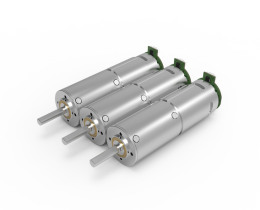


Looking for a suitable motor?

小编
Published2025-10-15
Unlocking Precision: The Art and Science of a Servo Motor Working
In the realm of modern automation, the servo motor stands as a marvel of engineering — a tiny powerhouse capable of delivering precise control over rotational movement. It’s what makes robotic arms move with such grace, camera lenses focus with pinpoint accuracy, and drones execute complex maneuvers seamlessly. But behind this seemingly simple device lies a sophisticated interplay of components that enables it to perform such intricate tasks.

At its core, a servo motor isn’t just a generic electric motor; it's a specialized device designed to provide high efficiency, rapid response, and exceptional accuracy. To truly appreciate its working, imagine a maestro conducting an orchestra. Every movement must be perfect, timed precisely, and adaptable to the changing rhythm. The servo motor, similarly, relies heavily on an intelligent feedback system to adjust its position and velocity with unwavering precision.
The Anatomy of a Servo Motor
A typical servo motor consists of a few key components: the electric motor itself, a gear train, a feedback device — often an encoder or resolver — and a control circuit. These parts work in harmony to translate electrical signals into exact mechanical movements.
The Motor: Usually a small DC or AC motor, it provides the fundamental rotational force. Its speed and torque are vital parameters that affect the overall performance of the servo.
Gear Train: By incorporating sets of gears, the motor’s high-speed, low-torque rotation is converted into a lower speed but higher torque output. This allows the servo to exert powerful, controlled movements even with compact hardware.
Feedback Device: Here’s where the magic truly happens. The feedback device continually monitors the motor’s position and sends the data back to the control system. Encoders are common, translating mechanical rotation into electrical signals denoting the current position with incredible accuracy.
Control Circuit: Often embedded within a servo drive, this circuit interprets signals from a control system — like a microcontroller or PLC — and determines whether the motor needs to speed up, slow down, or change direction to reach a desired position.
How the Servo Motor Works
Think of the process as a dance between the command signal and the motor’s response. When a control signal—say, a command to rotate 90 degrees—is sent, the following sequence unfolds:
The control circuit interprets this input, setting a target position within its internal memory. It then activates the motor, adjusting its operation based on the feedback received. The encoder continuously sends real-time position data back to the control circuit. As the motor approaches the target position, the control circuit applies a closing loop, reducing the motor’s power to avoid overshoot. Once the target is reached, the circuit sends a signal to hold the position steady, resisting external forces or disturbances.
This closed-loop feedback mechanism is the heartbeat of a servo system. It ensures movement is not just approximate but exact, with minimal error. With such precise control, servo motors can execute rapid, repetitive motions with consistency that’s essential for delicate applications like robotics or CNC machining.
Applications and Significance
Servo motors are everywhere, from tiny camera autofocus systems to massive industrial robotic arms. In hobbyist robotics, they are the preferred propulsion method, delivering smooth, controlled, and programmable movements. In aerospace, high-performance servos guide aircraft control surfaces with dependable accuracy. Even in medical devices, precision is paramount, and servo motors make it possible.
The efficiency of a servo motor combined with its ability to precisely control position and velocity makes it a cornerstone of automation. They are pivotal in manufacturing lines, conveyor systems, and even household appliances. Their adaptability means they can be scaled down for minute applications or scaled up for heavy payloads, all maintaining the same core principle — control through feedback.
The Gain of Feedback Control
Feedback is what separates a servo motor from a standard motor. It’s what makes movements repeatable, predictable, and adaptable. This continuous monitoring allows for dynamic adjustments, meaning the motor can correct any deviations from its intended path instantaneously. This characteristic is especially crucial in environments where precision is critical, such as surgical robots or satellite positioning systems.
Modern servo systems are increasingly intelligent, integrating microprocessors and advanced algorithms like PID control, adaptive control, or even machine learning techniques to optimize performance. As a result, the servo motor’s working capability continues to evolve, becoming faster, more accurate, and more energy-efficient.
In essence, the servo motor exemplifies a harmonious fusion of electrical, mechanical, and electronic engineering. It converts simple electrical input into controlled mechanical motion, continually refining its output through sophisticated feedback mechanisms. This interplay underpins countless innovations, seamlessly blending precision with performance — a true symphony of engineering intricacy.
Unlocking Precision: The Art and Science of a Servo Motor Working (Continued)
Having delved into the anatomy and basic operation of a servo motor, it’s worth exploring the finer nuances—what makes the difference in real-world applications and how advancements are shaping its future.
While the fundamental working principle remains similar across types, variations have evolved to fit different needs. The two primary categories are:
Positional Servos: These are designed primarily to move to a specific position and hold it. They are commonly used in robotics, RC vehicles, and automation where exact placement matters.
Blind or Continuous Rotation Servos: These are repurposed from standard positional servos but configured to turn continuously, akin to a regular motor, often used where position control is less critical but speed control is essential, such as conveyor belts.
Within positional servos, further distinctions can be made based on the motor type—brushed or brushless—and the feedback mechanism used, adding layers of complexity to their working.
The Control Loop Dynamics
Imagine a dance where each movement is dictated by real-time data. The control loop—often a PID (Proportional, Integral, Derivative) algorithm—enables the servo to respond accurately to commands, minimize errors, and adapt to changing conditions.
Proportional control addresses the present error—the difference between target and actual position—applying corrections proportionate to that error.
Integral control focuses on accumulated errors over time, eliminating persistent offsets.
Derivative control predicts future errors based on current trends, damping oscillations for smoother movement.
Now, with these control strategies working in concert, the system can navigate complex tasks with finesse, adapting instantly to external disturbances or load variations.
The Role of Modern Electronics
Advancements in microelectronics have been transformative. Today’s servo controllers are packed with digital processors that handle feedback data, execute complex algorithms, and communicate seamlessly with higher-level control systems.
Wireless connectivity and IoT integration further broaden their capabilities, enabling remote control, diagnostics, and predictive maintenance. Embedded sensors detect temperature, vibration, or load, preemptively alerting operators to possible issues—anticipating failures before they happen.
Power and Efficiency: Balancing Act
Power consumption is a crucial consideration in servo motor design. Designs are optimized to deliver high torque with minimal energy wastage. Regenerative braking, where the motor acts as a generator during deceleration, helps recover energy, improving overall system efficiency.
In battery-powered applications, such as drones or mobile robots, this efficiency ensures longer operational times. Meanwhile, advancements in material science—like rare-earth magnets—have increased the magnetic flux and torque density, pushing performance boundaries even further.
Challenges and Innovations
Despite their sophistication, servo systems face challenges. High-precision applications demand extremely low latency, noise immunity, and thermal stability. External factors like electromagnetic interference can disrupt feedback signals, requiring shielding and filtering.
Furthermore, as systems grow more complex, issues like synchronization among multiple servos or scaling for large industrial applications demand innovative solutions.
Emerging technologies, such as artificial intelligence and machine learning, are beginning to optimize servo control algorithms, foreseeing system behavior, and preempting faults. These intelligent systems could revolutionize how servo motors work, making them smarter, more adaptive, and even more integral to our daily lives.
Future Outlook: Servo Motors in a New Age
The future of servo motor technology is bright. Miniaturization continues, enabling their integration into even smaller devices without sacrificing power or precision. Variable frequency drives and advanced control algorithms promise smoother and more efficient performance.
In robotics, servo motors are anticipated to become the backbone of more autonomous, capable machines. In aerospace and automotive sectors, they will likely underpin more sophisticated active control surfaces and adaptive suspension systems.
The convergence of materials science, electronics, and software development ensures that servo motors will remain at the forefront of motion control innovation. They symbolize the ongoing quest for precision, dependability, and efficiency—driving progress across countless sectors.
So next time you see a robotic arm in action or a drone gently hovering, remember that beneath its seemingly effortless movement lies an intricate dance of electrical signals, mechanical gears, and endlessly intelligent feedback—powerful, precise, and endlessly fascinating: the working of a servo motor.
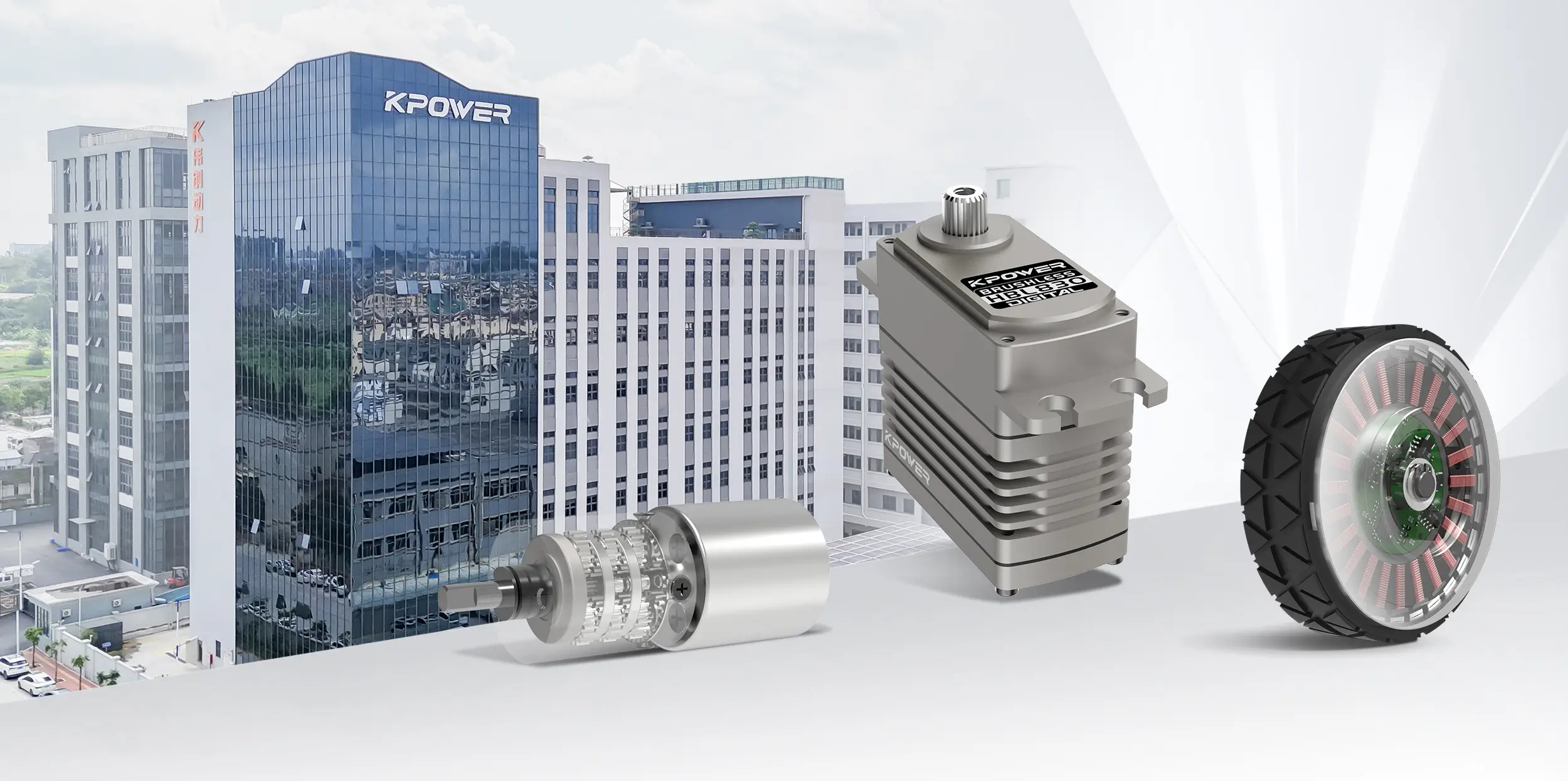
Established in 2005, Kpower has been dedicated to a professional compact motion unit manufacturer, headquartered in Dongguan, Guangdong Province, China.
Update:2025-10-15
Contact Kpower's product specialist to recommend suitable motor or gearbox for your product.