

Looking for a suitable motor?



小编
Published2025-10-15
Unlocking Precision: The Ultimate Guide on How to Test a Servo Motor
Servo motors are the backbone of countless devices—think robots, drone controls, remote-controlled vehicles, and industrial automation. Their ability to precisely control angular position, speed, and torque makes them indispensable. But like any intricate component, servo motors can fail or gradually degrade. That’s why knowing how to properly test your servo motor is a skill worth mastering. Whether you’re a hobbyist, a professional technician, or an engineer, being able to diagnose issues quickly can save you time, money, and frustration.
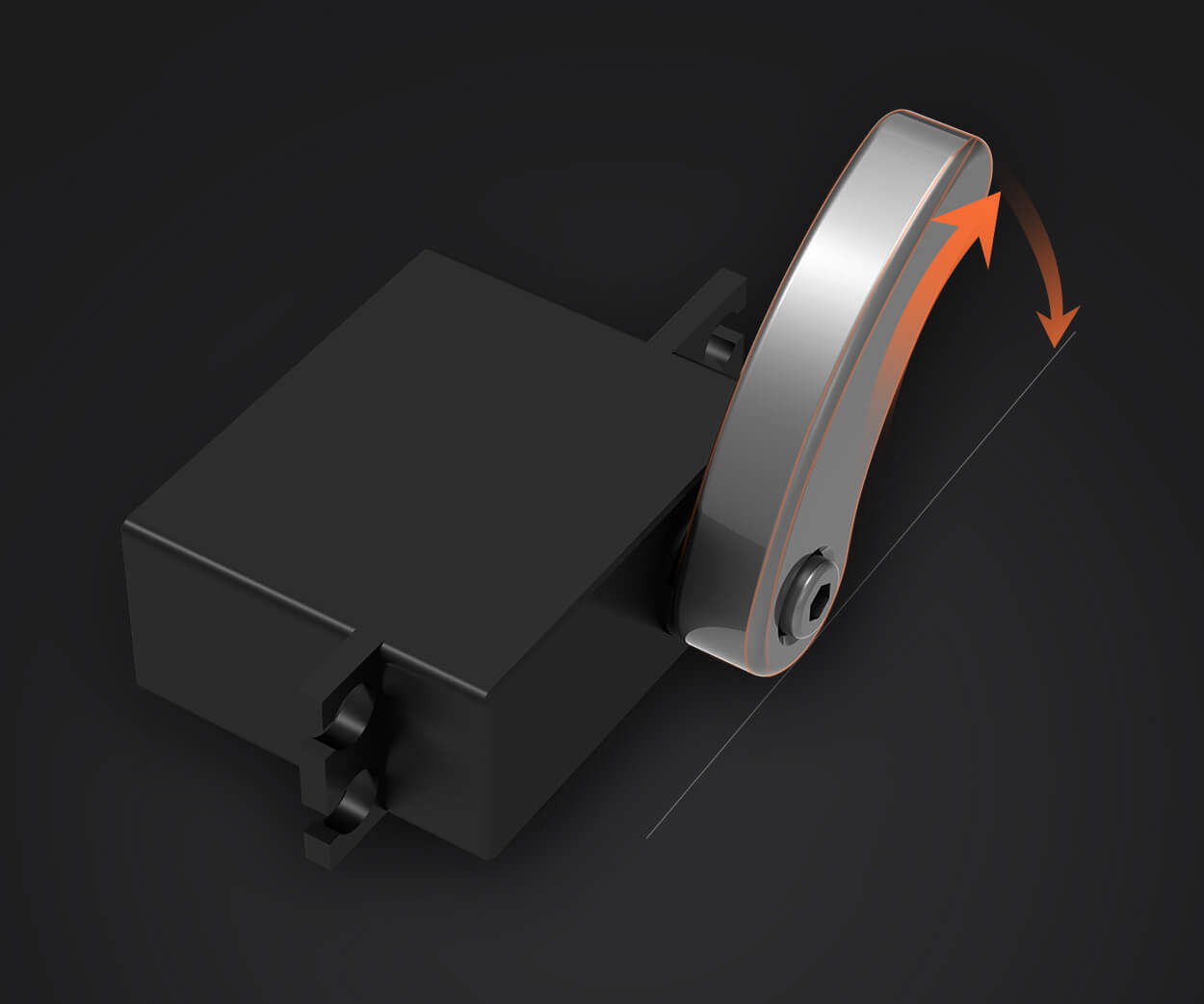
In this guide, we’ll explore the ins and outs of testing servo motors, breaking down everything into clear, manageable steps. By the end of this read, you’ll be equipped with practical methods to evaluate whether your servo is operating correctly or if it needs repairs.
Understanding Your Servo Motor
Before diving into testing procedures, it’s helpful to understand what a servo motor is and how it functions. A typical servo motor consists of a small DC motor, a feedback sensor (usually a potentiometer), and a control circuit within a housing. The control signal, often a pulse-width modulation (PWM) signal from a microcontroller or remote control unit, commands the servo to move to a specific position. The internal circuitry then compares the feedback from the sensor to the input command and adjusts the motor's position accordingly.
Key characteristics to remember:
Position accuracy: Servos can be precise, often within a fraction of a degree. Feedback loop: Continuous, real-time adjustment ensures accuracy. Power requirements: Typically powered with 4.8V to 6V DC, but check your servo specifications.
Common Signs of a Failing Servo
Before testing, identify symptoms of potential problems:
Unresponsive or jerky movement: The servo doesn't follow commands smoothly. Struggling to reach position: Noisy operation or hesitation at target angles. Overheating: Excess heat during operation can point to internal issues. Mechanical jams: Physical obstructions or binding. No movement at all: Complete failure, possibly due to electrical faults.
If your servo exhibits these signs, testing should be your first troubleshooting step.
Testing a servo motor does not necessarily require fancy equipment. Here’s a basic toolkit:
Power supply: Usually 4.8V – 6V DC, bench power supply or batteries. Signal generator: A PWM signal source, can be a microcontroller, servo tester, or a simple hobby servo tester. Multimeter: To check voltage and continuity. Oscilloscope (optional): For detailed analysis of PWM signals and electrical behavior. Test stand or jig: A simple fixture to hold the servo steady during testing. Replacement servo (for comparison): If available, a known-good servo for side-by-side testing.
Step 1: Visual Inspection
Start with a thorough visual check. Look for:
Discoloration, burn marks, or melting signs. Damaged or loose wires. Mechanical damage, stripped gears, or debris. Loose mounting screws.
Sometimes, damage is visible, providing immediate clues about internal failure.
Step 2: Basic Electrical Test
Next, verify the electrical connections:
Power lines: Check continuity and voltage output using a multimeter. Signal wire: Confirm it’s connected properly to your controller or tester. Ground connection: Essential for stable operation.
Ensure your power source is within specifications. Using a multimeter, verify that the voltage matches the servo’s requirements when powered on.
Step 3: Applying a Test Signal
Here’s where your PWM signal source comes into play. If you have a servo tester, simply connect the signal wire, power the servo, and send commands across various angles.
If using a microcontroller such as Arduino, generate PWM signals with specific pulse widths:
1 ms pulse: Commands the servo to move to 0° (or the minimum position). 1.5 ms pulse: Moves to the middle position. 2 ms pulse: Moves to the maximum position.
Most microcontroller code libraries, like Arduino's Servo library, handle this smoothly.
Step 4: Observing Mechanical Movement
As you send signals at different pulse widths, observe how the servo reacts:
Does it move promptly and accurately to the commanded position? Is the movement smooth, or jerky? Does it struggle or produce unusual noises? Does it reach the set position or stop short?
If the servo responds inconsistently, there may be internal issues such as worn gears, bad potentiometers, or motor faults.
Step 5: Test for Backlash and Jamming
Gently try to move the servo horn manually (when powered off):
Does it move freely? Are there any grinding sounds or rough spots? Is there backlash or wobble?
An unresponsive or stiff servo suggests internal mechanical damage or worn components.
Step 6: Check Power and Signal Stability
Use your multimeter or oscilloscope to verify that:
Power lines are stable with no dips or voltage spikes. The PWM signal is clean—look for appropriate pulse widths, consistent signal, and minimal noise.
Unstable power or signal issues can mimic or exacerbate internal fault symptoms.
Let's pause here to let these initial methods sink in. Testing a servo motor combines both electrical and mechanical evaluation, and sometimes the symptoms are subtle. The critical thing is to be systematic: start with simple visual and electrical checks before progressing to operational testing.
In the next part, we’ll delve deeper into advanced testing techniques, how to interpret results, and steps for troubleshooting common problems. Plus, we’ll cover how to perform preventive tests to ensure your servo operates smoothly for the long haul.
Leveraging innovations in modular drive technology, Kpower integrates high-performance motors, precision reducers, and multi-protocol control systems to provide efficient and customized smart drive system solutions.
Update:2025-10-15
Contact Kpower's product specialist to recommend suitable motor or gearbox for your product.