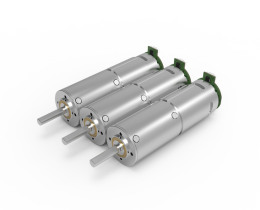


Looking for a suitable motor?

小编
Published2025-10-15
Understanding CNC Servo Motors and Their Vital Role in Modern Manufacturing
In the world of computer numerical control (CNC) machinery, servo motors are the unsung heroes driving the precision and reliability we’ve come to expect. These compact yet powerful components serve as the heartbeat of CNC machines, translating electronic signals into precise mechanical movements that enable complex machining tasks—be it cutting, milling, or drilling—as accurately as a surgeon’s scalpel.

What Are CNC Servo Motors? At their core, servo motors are specialized AC or DC motors equipped with feedback devices—most commonly encoders—that constantly monitor the motor’s position, speed, and torque. This real-time data allows the CNC system to make instant adjustments, maintaining exact control over the machine’s operation. The outcome? Precision parts with minimal error margins and consistent quality.
CNC servo motors are designed to deliver high torque at low speeds, making them ideal for applications that require accurate positional control. Unlike regular motors, they’re engineered for responsiveness and durability under demanding industrial conditions.
Why Do CNC Servo Motors Fail? Like any mechanical or electronic component, servo motors are susceptible to wear and tear, especially when subjected to harsh environments or improper maintenance. Some common causes of failure include:
Overheating due to continuous operation or inadequate cooling Bearings wearing out from vibrations or dirt ingress Electrical faults like blown capacitors or damaged windings Encoder malfunctions affected by dust, dirt, or misalignment Mechanical stress caused by overloading or improper handling
Understanding these root causes is essential for effective troubleshooting and maintenance, which can save both money and downtime.
The Importance of Regular Maintenance and Inspection Prevention remains better than cure. Many issues stemming from servo motor failure can be mitigated or even prevented through scheduled inspections and proper maintenance routines. Key practices include:
Keeping the motor and surrounding area free of dust and debris Regular lubrication of bearings and moving parts Verifying electrical connections for tightness and corrosion Checking the encoder’s alignment and cleanliness Monitoring motor temperature during operation
By taking proactive steps, technicians can extend the lifespan of CNC servo motors and ensure optimal performance.
Signs That Indicate a Need for Repair When a servo motor begins to show signs of trouble, acknowledging these symptoms early can prevent catastrophic failure. Typical indicators include:
Unusual noises like grinding, whining, or clicking Excessive heat or abnormal temperature increases Sudden drops in accuracy or positional errors Vibration or jerky movements Intermittent operation or failure to respond to commands
When these symptoms arise, a thorough diagnostic process is necessary to identify whether the issue stems from the servo motor itself, the driver, or other associated components.
The Diagnostic Process: Pinpointing the Servo Motor Issue
Troubleshooting servo motors involves a combination of visual inspection, electrical testing, and often, specialized diagnostic tools. Here’s a step-by-step guide to the typical diagnostic approach:
Visual Inspection: Start by examining the motor for obvious signs of damage—burn marks, loose wiring, or worn bearings. Check the encoder and connectors for dust, dirt, or misalignment.
Electrical Testing: Use a multimeter or specialized servo tester to evaluate resistance and continuity in windings. Look for shorts or open circuits that could indicate internal damage.
Encoder Testing: Since encoders provide critical feedback, test their output signals for consistency and accuracy. Faulty encoders can lead to erratic motor behavior.
Drive and Controller Check: Sometimes the issue isn’t with the motor but with the driver or controller. Verify that these components are functioning correctly and configured properly.
Operational Testing: If possible, run the motor in a controlled environment to observe its response under load and identify anomalies such as abnormal vibrations or noise.
Once the roots of the problem are identified, the next step involves repairing or replacing defective parts, which leads us to the critical phase of CNC servo motors repair.
Leveraging innovations in modular drive technology, Kpower integrates high-performance motors, precision reducers, and multi-protocol control systems to provide efficient and customized smart drive system solutions.
Update:2025-10-15
Contact Kpower's product specialist to recommend suitable motor or gearbox for your product.