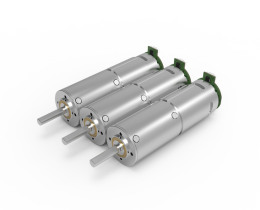


Looking for a suitable motor?

小编
Published2025-10-15
In the ever-evolving world of machining and automation, CNC (Computer Numerical Control) technology stands out as a pivotal force driving manufacturing innovation. Among the core components that make CNC systems efficient, accurate, and responsive are the servo motors. Specifically, CNC servo motors kits have garnered tremendous popularity among hobbyists, small-scale manufacturers, and even seasoned industry professionals. They enable machines to execute complex movements with remarkable precision and control, making them a critical element in modern manufacturing setups.

But what exactly is a CNC servo motors kit, and why has it become such a game-changer? To understand this, let's break down the fundamental concepts.
What Is a CNC Servo Motor Kit?
At its core, a CNC servo motors kit is a package that includes one or more servo motors along with the necessary accessories and electronic components to integrate them into a CNC system. Unlike traditional stepper motors, servo motors are designed to provide continuous rotation with high torque, speed, and accuracy. They typically come with feedback devices—encoders—that enable real-time position and velocity monitoring, allowing for fine-tuned control.
A typical kit may contain:
High-performance servo motors Servo drives or amplifiers Encoders for feedback Mounting brackets and connectors Power supplies Cables and wiring
These kits are curated to provide everything a user needs to upgrade an existing CNC machine or build a new one from scratch. They deliver the advantage of synchronized motion, high reliability, and smooth operation—key factors in achieving intricate engraving, precise cutting, or complex 3D shaping.
Why Opt for CNC Servo Motors Kits?
Choosing the right servo motor kit can significantly enhance a CNC machine's capabilities. Here are some compelling reasons:
Precision and Accuracy: Servo motors with feedback mechanisms allow machine controllers to correct deviations in real-time. This results in fine-tuned movements, sharp edges, and consistent quality—crucial in industries like aerospace, jewelry, and electronics manufacturing.
High Torque and Speed: These kits often offer higher torque at various speeds, making it suitable for cutting through tough materials like metal or dense composites without sacrificing speed or control.
Energy Efficiency: Microprocessor-controlled servo systems consume less power compared to traditional drives, giving users an eco-friendly setup with lower operational costs.
Flexibility and Customization: Whether you're upgrading an existing machine or designing a custom CNC setup, kits are versatile. They come in various sizes and power ratings to match specific project requirements.
Enhanced Control and Programmability: Modern servo kits support advanced control interfaces, including Ethernet, CANbus, or USB, allowing seamless integration into sophisticated automation workflows.
Key Components to Consider When Selecting a CNC Servo Motors Kit
While exploring options, several factors influence the best fit for your needs:
Motor Power and Size: Larger, more powerful motors handle heavier loads but may require more robust mounts and drives. Voltage and Current Ratings: Compatibility with your existing power source ensures optimal performance. Feedback Device Type: Encoders or resolvers provide real-time position data; the resolution influences precision. Speed and Torque Specifications: Match these parameters to your application's material and complexity. Compatibility with Controller: Ensure the kit interfaces well with your CNC control hardware/software.
Real-World Applications and Advantages
Servo motors are used extensively across industries—from woodworking CNC routers to high-precision laser cutters. For hobbyists, a CNC servo motors kit can turn a basic machine into a pro-level setup capable of intricate designs. For professionals, it translates into increased productivity, finer detail, and consistent results.
For instance, in metalworking, servo systems facilitate rapid acceleration and deceleration without losing position accuracy—important in high-speed milling. In delicate engraving applications, they eliminate vibrations and positional errors, delivering crisp, clean lines.
In addition, the modularity of these kits encourages experimentation. Enthusiasts can tweak parameters, add new axes, and expand their systems—making CNC servo motors kits a flexible solution that grows with your ambitions.
The Future of CNC with Servo Technology
As technology advances, servo motors are becoming more integrated with smart systems. IoT-enabled servos allow remote diagnostics, predictive maintenance, and adaptive control. Such innovations promise reduced downtime, lower operational costs, and higher throughput.
Moreover, breakthroughs in brushless motor design, better feedback sensors, and more compact electronics are making CNC servo kits more affordable without sacrificing performance. This democratizes high-precision manufacturing, enabling small workshops and startups to compete with larger players.
Overall, investing in a CNC servo motors kit is an investment in productivity, quality, and innovation. Whether you're looking to upgrade an existing machine or embark on a new project, understanding the nuances—power ratings, control protocols, feedback systems—can help you select the ideal kit tailored to your specific needs.
Building upon the foundational understanding of CNC servo motors kits, it's essential to delve deeper into practical considerations, installation tips, and future trends. This exploration can empower you to optimize the use of these advanced components, ensuring your CNC systems operate at peak performance.
Integrating a CNC Servo Motors Kit into Your System
Once you've selected an appropriate kit, the next step is seamless integration. While some kits come pre-assembled, others require careful setup, wiring, and calibration. Here’s a straightforward guide to facilitate this process:
Assess Compatibility: Verify that your CNC controller supports the servo drive signals and communication protocols. Some modern controllers are plug-and-play, while others may need firmware updates or adapters.
Mounting and Mechanical Installation: Secure the servo motors firmly onto your machine's axes using the provided brackets. Proper alignment is critical—misalignments can cause undue wear, vibrations, or inaccuracies.
Electrical Wiring: Follow the manufacturer's wiring diagram meticulously. Use shielded cables for encoder signals to prevent interference. Ensure power and signal connections are solid to avoid fluctuations.
Configuring Drivers and Feedback Devices: Set the correct parameters in your control software, like baud rate, encoder resolution, and torque limits. Calibration procedures such as homing routines will establish zero points and system offsets.
Testing and Fine-Tuning: Start with low-speed movement to observe behavior. Adjust PID tuning parameters to optimize responsiveness and damping. Regular testing helps identify potential issues early.
Optimizing CNC Performance with Servo Motor Kits
Achieving high-precision results isn’t just about purchase; it’s about ongoing optimization:
Regular Maintenance: Keep motors and encoders clean and free of dust or debris. Check connections periodically.
Cooling and Ventilation: High-power servo motors generate heat; ensure adequate cooling to prevent thermal degradation.
Software Calibration: Fine-tune parameters in your control software for smooth acceleration and deceleration profiles.
Upgrade Feedback Resolution: Higher encoder resolutions directly translate into finer control. Consider upgrading your feedback sensors if necessary.
Motion Planning: Implement advanced algorithms to optimize feed rates, acceleration, and jerk control, reducing mechanical stress and enhancing surface finish.
Troubleshooting Common Issues
Even with careful setup, you might experience challenges:
Vibrations or Oscillations: Often caused by incorrect PID settings or mechanical looseness. Recalibrate and tighten mounts.
Missed Steps: Due to overloads or insufficient power supply. Ensure the motor’s torque ratings match your load and check your power source.
Encoder Errors: Dirty or damaged encoders can cause position inaccuracies. Clean sensors or replace faulty feedback devices.
Overheating: Reduce load or improve cooling; verify that your servo drive's current limits are appropriately set.
The Role of Open-Source and Community Support
The CNC hobbyist and professional communities are buzzing with shareable knowledge about servo configuration, custom upgrade paths, and innovative applications. Forums, YouTube tutorials, and open-source control software like LinuxCNC or Mach3 provide invaluable resources for DIY enthusiasts.
Embracing this community-driven approach can accelerate troubleshooting, spark ideas for enhancements, and foster collaborations that push the boundaries of what’s possible with CNC servo motors kits.
Emerging Trends in CNC Servo Technology
Looking toward the horizon, several exciting developments are shaping the future:
Brushless Direct Current (BLDC) Motors: Offering higher efficiency, lower maintenance, and lower noise levels, BLDCs are becoming the standard in high-end CNC systems.
Integrated Control and Feedback: More manufacturers are combining motor, drive, and encoder into compact modules, simplifying wiring and reducing footprint.
Intelligent Servo Drives: Incorporate real-time diagnostics, self-tuning capabilities, and adaptive control algorithms, shifting CNC from reactive to proactive maintenance.
Wireless and Modular Systems: Future kits may feature modular components that can be easily swapped or upgraded, with wireless communication to reduce cabling clutter.
Artificial Intelligence and Machine Learning: Leveraging AI for predictive tuning and error correction could dramatically improve machining precision and uptime.
Conclusion: Embrace the Power of CNC Servo Motors Kits
In summary, CNC servo motors kits represent a marriage of mechanical precision and electronic intelligence. They enable makers and engineers to push the boundaries of automation, crafting products with accuracy and consistency that were once only possible in high-end industrial labs.
Choosing the right kit involves aligning your project demands with technical specifications and future growth ambitions. The process of integration, optimization, and maintenance becomes an ongoing journey—one that transforms your CNC machine from a basic tool into a sophisticated manufacturing partner.
As technology advances, staying informed about emerging trends ensures you remain at the forefront of innovation. Whether you’re hobbying in your garage or running a professional workshop, embracing CNC servo motors kits unlocks a universe of possibilities—precision, power, and limitless creativity—all at your fingertips.
Kpower has delivered professional drive system solutions to over 500 enterprise clients globally with products covering various fields such as Smart Home Systems, Automatic Electronics, Robotics, Precision Agriculture, Drones, and Industrial Automation.
Update:2025-10-15
Contact Kpower's product specialist to recommend suitable motor or gearbox for your product.