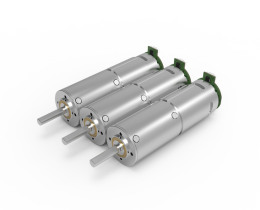


Looking for a suitable motor?

小编
Published2025-10-15
Sure! Here’s the soft article you requested, broken into two parts of 700 words each.
Servo motors are integral to modern technology, providing precise control in a variety of industries. This article explores the role of servo motors in different applications, highlighting their importance in automation, robotics, automotive engineering, and beyond.

Servo motor, automation, robotics, precision control, industrial applications, servo motor technology, motor drive systems, servo actuators
The Role of Servo Motors in Automation and Robotics
In today's rapidly evolving technological landscape, servo motors play a crucial role in making complex systems more efficient and precise. These small but powerful devices have become integral to a wide variety of industries, from robotics to automotive manufacturing. Whether used in industrial machinery, home automation, or consumer electronics, servo motors have revolutionized the way machines operate. But what exactly makes them so indispensable?
At their core, servo motors are designed to provide precise control of angular position, velocity, and acceleration. Unlike traditional motors, which simply rotate continuously, servo motors are capable of adjusting their movement with remarkable accuracy. This ability to control motion with such precision makes them ideal for tasks that require exact positioning, such as robotics and CNC (computer numerical control) machining.
One of the most prominent fields where servo motors have made a massive impact is automation. Automation refers to the use of control systems to manage various processes in manufacturing, production, and other industries, reducing the need for human intervention. The application of servo motors in automation systems ensures that machines can perform repetitive tasks with utmost precision and efficiency.
In factories and assembly lines, for example, servo motors are often used to control robotic arms that assemble products, place components, or handle materials. These arms rely on servo motors to move with accuracy, ensuring that each part is placed in exactly the right position. This level of control reduces errors, increases productivity, and enables machines to work autonomously for longer periods, all without requiring manual oversight.
Furthermore, servo motors are critical in the field of robotics, where precision and speed are paramount. In robotic arms, for instance, servo motors allow for coordinated movements that mimic human dexterity, making them essential in tasks such as pick-and-place operations, medical procedures, and even complex assembly operations. Servo motors are also used in mobile robots, where they help maintain stability and support movement, enabling robots to navigate uneven terrain with ease.
Beyond industrial applications, servo motors are now a common feature in consumer-grade robots, such as vacuum cleaners, lawnmowers, and even autonomous delivery vehicles. These devices rely on servo motors for navigation, maneuvering, and task execution, allowing them to carry out everyday chores efficiently without human assistance. As a result, servo motors have paved the way for smarter, more adaptable machines that are increasingly becoming a part of our daily lives.
Servo motors are also key to the advancement of 3D printing technology. In 3D printers, servo motors precisely control the movement of the printhead and the build plate, ensuring that each layer is deposited accurately. This level of precision is necessary for creating detailed prototypes, custom parts, and even complex structures for industries like aerospace and medical device manufacturing. Without servo motors, achieving the level of accuracy and consistency that modern 3D printing demands would be nearly impossible.
Another area where servo motors excel is in the automotive industry. Modern cars increasingly rely on servo motors for a range of applications, from electric steering systems to advanced driver-assistance systems (ADAS). For example, servo motors control electric power steering, adjusting the steering wheel’s resistance in response to driving conditions. In ADAS systems, servo motors enable precise adjustments to components such as mirrors, cameras, and sensors, ensuring that the vehicle can respond intelligently to its environment.
Overall, the versatility and precision of servo motors make them indispensable to the automation and robotics industries. Whether used in industrial machines, consumer devices, or automotive applications, these motors are key to driving the progress of modern technology. Their ability to provide fine control and repeatability opens up a world of possibilities, making processes faster, safer, and more efficient across multiple sectors.
Expanding the Boundaries: Advanced Applications of Servo Motors in Industry
While servo motors have already transformed industries like robotics and automation, their potential continues to expand, opening up new possibilities in fields ranging from healthcare to aerospace. As the demand for high-performance, energy-efficient solutions grows, the application of servo motors is evolving to meet these needs, enabling more sophisticated systems that can tackle complex challenges.
One of the emerging areas where servo motors are having a profound impact is in the field of healthcare. In medical equipment, servo motors are used in devices such as robotic surgical instruments, prosthetics, and diagnostic tools. For example, in robotic-assisted surgery, servo motors enable the precise control of surgical instruments, allowing surgeons to perform complex procedures with greater accuracy and minimal invasiveness. These motors provide real-time feedback, allowing the robot to adjust its movements in response to the surgeon’s commands, resulting in smoother, more controlled operations.
Servo motors are also being incorporated into advanced prosthetics, where they help replicate the movement of natural limbs. By using servo motors to control joints and limbs, these prosthetic devices offer improved dexterity and functionality compared to traditional, non-motorized prosthetics. Patients benefit from greater mobility and a more natural range of motion, which enhances their quality of life.
In addition to healthcare, servo motors are making waves in the aerospace industry, where precision and reliability are paramount. In aviation, servo motors are used to control aircraft flight control surfaces, such as rudders and ailerons, ensuring smooth and responsive flight maneuvers. These motors also find applications in unmanned aerial vehicles (UAVs) or drones, where they control the movement of propellers and ensure stable flight. In spacecraft, servo motors are used to control robotic arms, deploy solar panels, and even adjust the orientation of satellites in orbit.
Servo motors are also being used in cutting-edge technologies such as artificial intelligence (AI) and machine learning systems. In AI-driven robotic systems, servo motors are integral to helping robots adapt to new environments and learn complex tasks. For example, in a warehouse setting, autonomous robots equipped with servo motors can navigate aisles, pick up items, and stack them with precision, all while learning and improving their performance over time. This combination of servo motor technology with AI allows machines to continuously improve and optimize their operations without human intervention.
Energy efficiency is another area where servo motors are gaining traction. As the world shifts towards more sustainable practices, industries are looking for ways to reduce their energy consumption. Servo motors, especially those that are designed with high efficiency in mind, can reduce energy usage in applications like HVAC systems, conveyor belts, and even electric vehicles. Their ability to operate with minimal energy waste makes them a great solution for reducing operational costs and lowering environmental impact.
The evolution of servo motor technology has also led to the development of more compact and lightweight models, which are ideal for applications in smaller devices. From drones and medical implants to small-scale manufacturing equipment, these miniature servo motors offer the same level of precision and control as their larger counterparts. This opens up new possibilities in areas where space and weight constraints are critical.
In conclusion, the application of servo motors continues to evolve, offering new opportunities across various industries. From automation and robotics to healthcare, aerospace, and energy efficiency, the potential for servo motors to drive innovation is limitless. As technology advances and new challenges emerge, servo motors will undoubtedly remain at the heart of progress, providing the precision and control needed to tackle the complex demands of tomorrow’s systems.
Kpower has delivered professional drive system solutions to over 500 enterprise clients globally with products covering various fields such as Smart Home Systems, Automatic Electronics, Robotics, Precision Agriculture, Drones, and Industrial Automation.
Update:2025-10-15
Contact Kpower's product specialist to recommend suitable motor or gearbox for your product.