

Looking for a suitable motor?

小编
Published2025-10-15
The Heartbeat of Modern Automation: An Introduction to Servo Motors and Servo Drives
Imagine a world where machinery moves with the finesse of a human hand, executing tasks with unparalleled precision and speed. This isn’t science fiction; it’s the reality made possible by advancements in servo motor and servo drive technology. In essence, these components act as the nervous system of modern automated systems, enabling machines to perform complex movements with remarkable accuracy.
.webp)
What Is a Servo Motor? A servo motor is a rotary or linear actuator that allows for precise control of position, velocity, and acceleration. Unlike standard motors which run continuously at a set speed, servo motors are designed for controlled movements. They rely on feedback mechanisms—often encoders or resolvers—that constantly monitor the motor's position, sending data to the control system to make real-time adjustments. This closed-loop system ensures that the motor responds accurately to commands, resulting in refined and reliable operation.
Most servo motors are brushless DC motors or AC servos, constructed with high-quality components for durability and high performance. Their compact size, combined with powerful control capabilities, makes them ideal for applications requiring exact positioning—think robotic arms assembling tiny electronic components or precision CNC machines carving intricate designs.
Understanding the Servo Drive The servo drive, sometimes called a servo amplifier, acts as the brain behind the servo motor. It interprets signals from the control system (like a PLC or motion controller) and translates them into electrical power tailored specifically to the motor’s requirements. The drive manages the power delivery, controlling parameters such as current, voltage, and frequency to efficiently execute commanded movements.
The elegance of the servo drive lies in its ability to continually monitor feedback from the motor. If the position deviates from the target, the drive adjusts power instantaneously to correct it. This tight feedback loop results in smooth, accurate motion—crucial in industries where precision isn’t just desirable, but mandatory.
Why Are Servo Motors and Drives Replacing Conventional Motor Systems? Conventional motors—like stepper motors—have served industry well, but they come with limitations: limited torque at high speeds, less dynamic control, and often more energy consumption. Servo systems offer a compelling alternative because they combine high efficiency, precise control, and responsiveness.
For instance, in automated manufacturing, the capability to execute rapid, accurate moves reduces cycle times and increases throughput. In robotics, precise joint control allows for delicate handling and complex movements that mimic human dexterity.
Key Components of a Servo System A typical servo system comprises the servo motor, servo drive, feedback device, and a control unit. The feedback device constantly measures the motor's position, speed, or torque, and relays this data back to the drive. The drive then compares this real-time data with the target values set by the control system, making the necessary adjustments almost instantaneously.
This tight integration facilitates multiple benefits:
High precision and repeatability Fast response times Smooth motion profiles Energy efficiency Simplified maintenance thanks to fewer mechanical parts
Applications Across Industries The versatility of servo motors and drives spans numerous sectors. In the automobile industry, they power robotic welding arms with meticulous accuracy. In electronics manufacturing, they control chip placement and assembly. Packaging machines rely on servo-driven motion to maintain high speeds without sacrificing accuracy. Even in renewables, such as wind turbines, servo systems help optimize pitch control and power output.
In essence, the evolution of servo technology has revolutionized how machines operate—bringing about smarter, faster, and more precise automation solutions. This initial dive sets the stage for a deeper exploration of how these systems work, their types, and future trends shaping this exciting field.
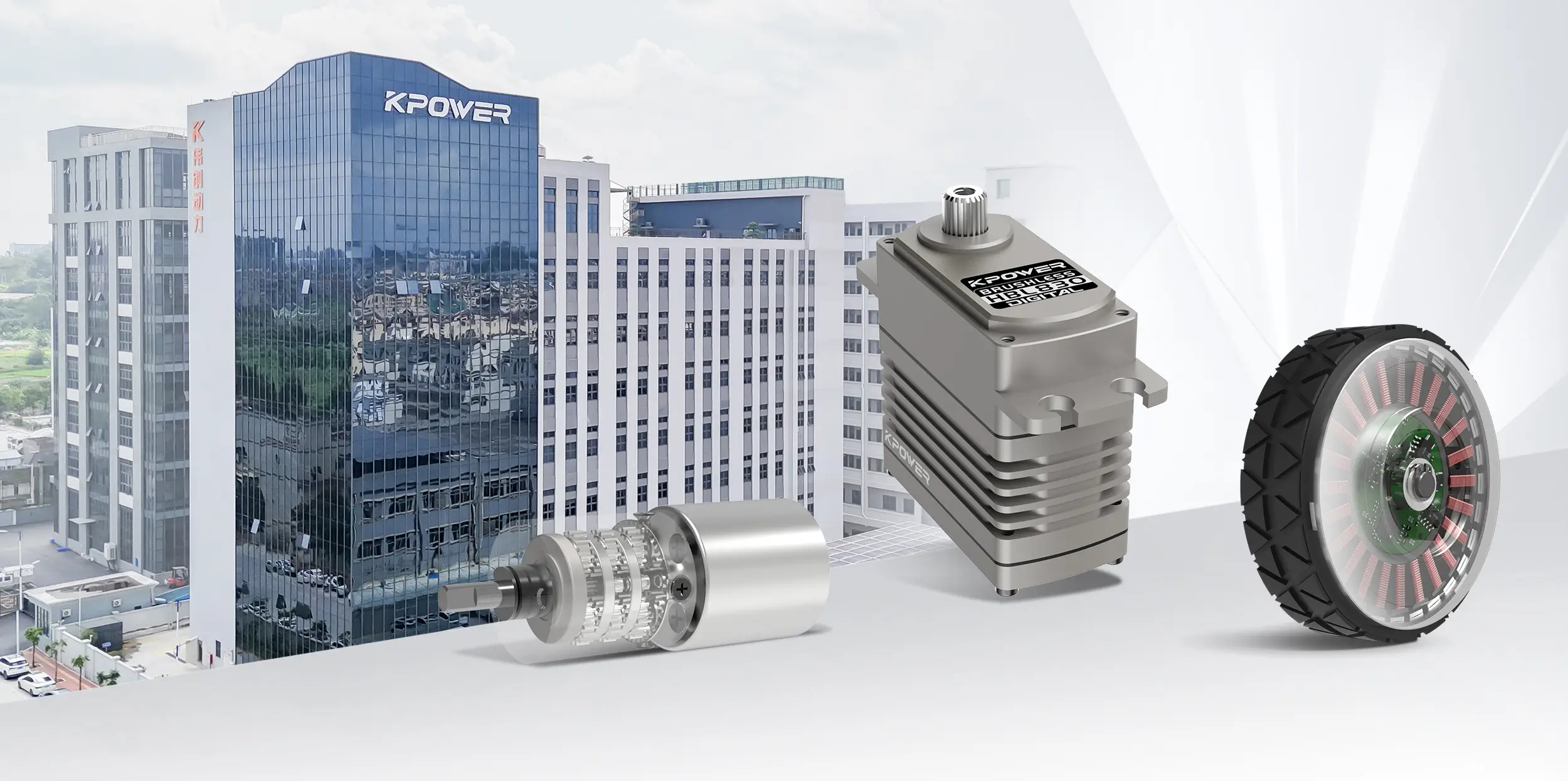
Kpower has delivered professional drive system solutions to over 500 enterprise clients globally with products covering various fields such as Smart Home Systems, Automatic Electronics, Robotics, Precision Agriculture, Drones, and Industrial Automation.
Update:2025-10-15
Contact Kpower's product specialist to recommend suitable motor or gearbox for your product.