

Looking for a suitable motor?

小编
Published2025-10-15
In the fast-evolving landscape of industrial automation, the drive for more efficient, precise, and reliable motion control solutions has never been more critical. Among the groundbreaking innovations leading this charge are integrated servo motors and drives — a technological marriage that’s reshaping how machines operate, optimize, and intelligentize.
.webp)
At its core, an integrated servo motor and drive combine the motor and drive electronics into a single compact package. Unlike traditional setups where the drive is a separate component connected to the motor via cables, integration streamlines this relationship, offering several compelling advantages. This fusion simplifies installation, reduces wiring complexity, minimizes a system’s footprint, and enhances overall reliability—all paramount factors in today's competitive manufacturing environments.
The concept of integration isn’t merely physical; it symbolizes the synergy of motor and drive controls working as one entity, providing superior performance. When talking about servo motors, precision is king. They serve as the backbone of high-end automation applications—robotics, CNC machinery, textile manufacturing, packaging, and beyond. However, the true potential of servo systems is unlocked when control electronics are seamlessly embedded within the motor itself. This is precisely what integrated servo drives achieve.
Why are integrated servo motors and drives changing the game? It starts with their inherent simplicity. Traditional servo systems involve multiple components—motors, drives, controllers, cabinets, and extensive wiring—each presenting potential points of failure, increasing costs, and requiring meticulous maintenance. An integrated solution drastically reduces these complexities. With the electronics and motor housed together, setup becomes straightforward—plug and play, with less room for miswiring or interpretation errors.
Beyond ease of installation, the integration improves dynamic performance. Modern integrated servo drives leverage advanced digital control algorithms—like Field-Oriented Control (FOC)—to enable incredibly precise positioning, smooth acceleration and deceleration, and reduced servomotor ripple. The increased control fidelity translates directly into higher quality finishes in manufacturing and finer positional accuracy essential to intricate applications like semiconductor manufacturing or aerospace component assembly.
Enhanced diagnostics and real-time communication are another benefit. Integrated servo drives often feature onboard sensors, temperature monitoring, and fault detection, providing real-time feedback to operators and automation systems. Troubleshooting becomes faster and more straightforward because the entire system's health status is encapsulated within a single package. This increases uptime and reduces costly downtime—critical factors in high-volume production lines.
Energy efficiency is also notably improved with integrated servo solutions. Because the electronics are designed specifically for the motor, they can optimize power flow and minimize energy waste more effectively than traditional setups. This aspect not only reduces operational costs but aligns with sustainable manufacturing practices increasingly demanded by global regulators and conscious corporations alike.
The compact size of integrated units also opens new possibilities in machine design. Engineers can now think creatively about space utilization, especially in applications where space is at a premium such as compact robots, wearable manufacturing stations, or portable devices. This miniaturization encourages innovative machinery architectures that are lighter, more agile, and adaptable.
Looking ahead, the advances in integrated servo motor and drive technology intersect with other industry trends such as smart manufacturing, Industry 4.0, and the Internet of Things (IoT). Modern integrated solutions come equipped with communication protocols like EtherCAT, CANopen, Profinet, and EtherNet/IP, enabling seamless data exchange with higher-level control systems. This connectivity facilitates predictive maintenance, detailed process analytics, and adaptive control strategies—powers that turn simple automation into intelligent, self-optimizing systems.
In conclusion, integrated servo motors and drives are much more than a cost-effective alternative; they are a game-changer that propels industries toward smarter, more efficient, and more reliable automation. Their ability to combine high performance with simplified installation and maintenance makes them indispensable in the pursuit of modern manufacturing excellence. As technology continues to advance, expect these integrated systems to become more sophisticated, offering unprecedented levels of precision, connectivity, and operational excellence—propelling industries into a new era of automation mastery.
While the advantages of integrated servo motors and drives are already impressive, understanding their specific features and how they influence different industry sectors can provide a clearer picture of their transformative potential. With a focus on performance, adaptability, and technological innovation, these systems exemplify the future of motion control.
Key Features of Integrated Servo Motors and Drives
One hallmark characteristic of these integrated solutions is their compact design. Engineering advancements have resulted in a minimal footprint, which is highly advantageous in space-constrained environments. This compactness does not come at the expense of power or performance; rather, it ensures that systems can deliver high torque and rapid acceleration with precision, all within a small package.
Another feature that’s gaining momentum is modularity. Many manufacturers now produce integrated servo units that can be easily customized or upgraded, ensuring compatibility with various machine architectures or future technological upgrades. For example, some units can be fitted with additional I/O ports, different encoder options, or communication interfaces. This flexibility nurtures a longer operational lifespan and reduces the need for complete system replacements.
Advanced Control Algorithms like FOC and vector control are standard in these integrated systems, delivering superior torque control and smooth operation. Digital control also facilitates adaptive tuning, which automatically adjusts parameters based on load changes, temperature fluctuations or wear, maintaining optimal performance over time. This self-optimizing capability translates into higher productivity, less downtime, and lower maintenance costs.
From a safety standpoint, integrated systems often incorporate features such as electronic overload protection, emergency stop functions, and fault diagnostics. These features foster safer operating environments, especially critical in sectors like automotive manufacturing or heavy industry where safety is paramount.
Thermal Management is another critical aspect. The close coupling of electronics and motor windings allows manufacturers to implement sophisticated cooling strategies—such as integrated heat sinks or liquid cooling—ensuring the system remains within safe operating temperatures even during continuous high-power operation. This not only prolongs lifespan but sustains consistent performance.
Communication and Data Integration
The digital era demands that machinery not only perform but also communicate intelligently. Current integrated servo systems are equipped with various industrial communication protocols, including EtherCAT, ProfiNet, EtherNet/IP, and CANopen, facilitating seamless integration into complex automation networks. This interoperability supports real-time monitoring of vital parameters, enabling predictive maintenance and reducing unexpected failures.
Moreover, integrated serial interfaces and software tools provide engineers with rich data sets for detailed analysis. They can monitor things like vibration, temperature, and load torque in real-time—from a centralized control environment. This level of insight not only enhances maintenance planning but also empowers process optimization.
Application Spectrum and Industry Impact
From small robotics in electronics assembly to massive CNC machines in aerospace, integrated servo systems serve a broad spectrum of industries. Their adaptability makes them ideal for applications requiring high precision, rapid response times, or variable load handling. In packaging plants, their quick acceleration and deceleration capabilities can significantly boost throughput. In semiconductor manufacturing, unparalleled positional accuracy and system stability are prerequisites met perfectly by integration.
Additionally, the integration simplifies machine design—less wiring and fewer components mean reduced production time and cost. Engineers can design more complex, multi-axis systems without the traditional clutter or complexity. This facilitates the development of innovative machinery that can be more versatile and easier to maintain.
Future Trends and Innovations
As technology progresses, expect integral enhancements such as artificial intelligence (AI) and machine learning to find their way into these systems. These advancements could allow servo drives to predict failures before they happen or optimize motion profiles based on real-time data, further improving efficiency and reducing operational costs.
Another promising frontier is wireless communication within integrated systems, which could simplify installation even further and reduce physical cabling. Combined with advances in materials science, such as new cooling materials or high-temperature electronics, these developments promise to push integrated servo solutions into the realms of even higher performance and reliability.
Conclusion: Embrace the Future of Automation
In an era where manufacturing speed, precision, flexibility, and sustainability define success, integrated servo motors and drives are at the forefront of technology. Their ability to deliver high precision, reliable performance, easy integration, and future-ready connectivity make them indispensable tools for modern industry leaders.
The shift toward integration reflects more than just technological progress—it exemplifies a move towards smarter, leaner, and more adaptive automation solutions. Whether upgrading existing machinery or designing new systems, embracing integrated servo technology can unlock unprecedented levels of productivity and innovation, shaping the factories and machines of tomorrow.
In essence, if you're looking to stay ahead in an intensely competitive global market, consider the immense potential of integrated servo motors and drives. They're not just components—they're the engines powering industry’s next chapter.
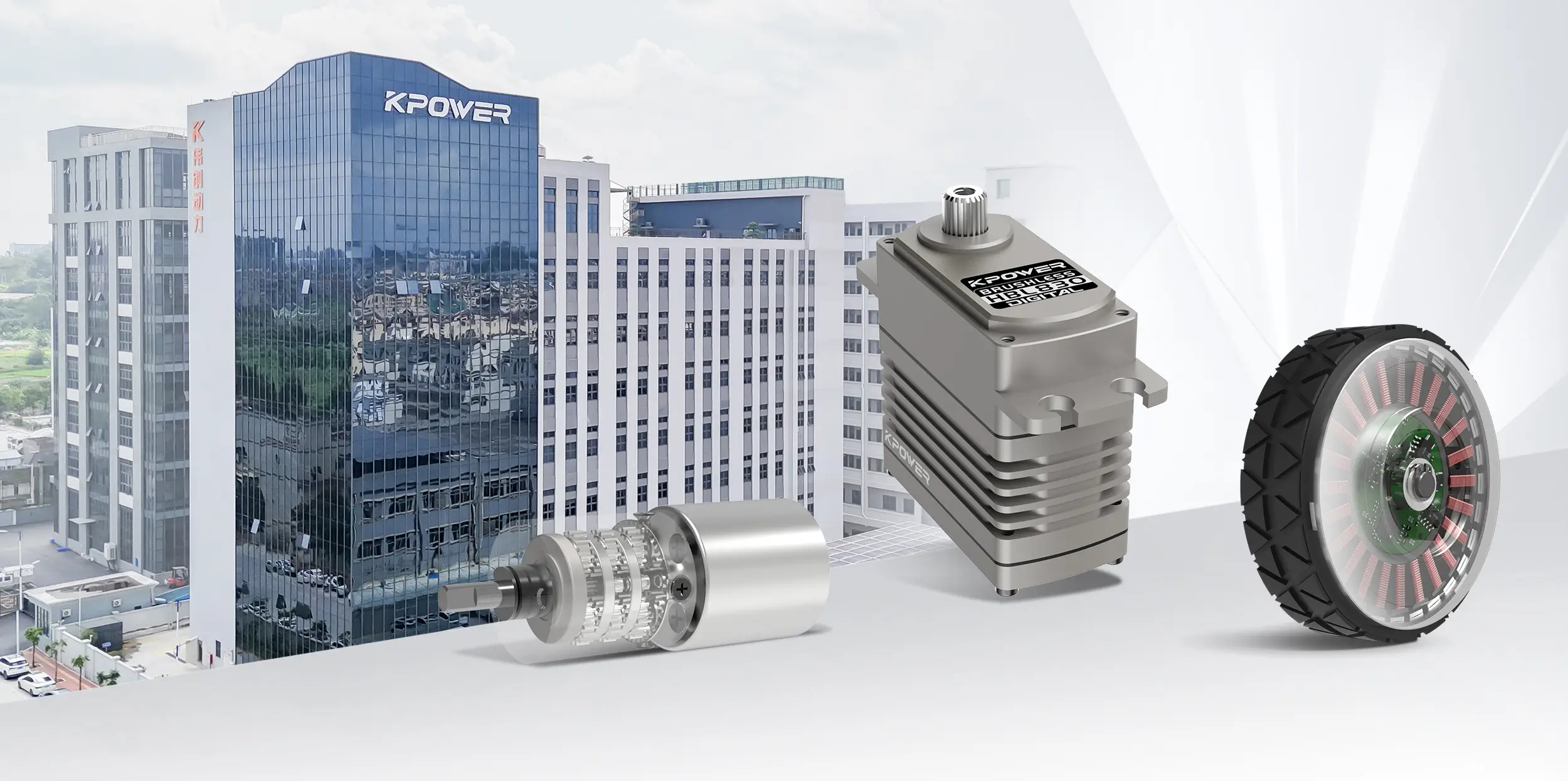
Leveraging innovations in modular drive technology, Kpower integrates high-performance motors, precision reducers, and multi-protocol control systems to provide efficient and customized smart drive system solutions.
Update:2025-10-15
Contact Kpower's product specialist to recommend suitable motor or gearbox for your product.