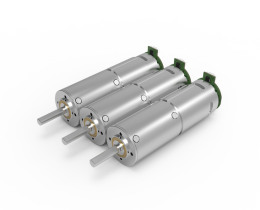


Looking for a suitable motor?

小编
Published2025-10-15
Understanding Delta Servo Motors and Their Manuals
In the realm of modern automation and robotics, delta servo motors stand out as crucial components that drive precision, efficiency, and reliability. Whether you're a seasoned engineer or an enthusiast stepping into the world of industrial automation, understanding how to read and utilize a delta servo motor manual can significantly reduce downtime, improve performance, and help you troubleshoot with confidence.

What Is a Delta Servo Motor?
At its core, a delta servo motor is a type of electric motor used for precise positioning and speed control. Unlike simple motors, servo motors incorporate feedback systems — typically encoders or resolvers — that relay real-time positional data back to a controller. This closed-loop system ensures highly accurate movements, making delta servo motors ideal for applications like CNC machinery, robotics, packaging equipment, and even medical devices.
Delta Electronics, a leader in power and thermal management solutions, manufactures a range of servo motors tailored for diverse industrial needs. Their servo motors combine robustness with technological sophistication, often integrated with advanced drives and controllers to optimize performance.
Why is the Manual So Important?
Every delta servo motor model comes with a manual—a comprehensive document detailing specifications, wiring diagrams, calibration procedures, maintenance tips, troubleshooting guides, and safety notes. These manuals are the key to unlocking the full potential of your servo motor, ensuring longevity and consistent operation.
A well-understood manual helps users:
Install and wire the motor properly Configure parameters in the drive system Calibrate the motor for specific applications Identify and troubleshoot issues swiftly Perform maintenance and prevent failures
Knowing how to navigate these manuals is as vital as understanding the motor's mechanical and electronic components.
Anatomy of a Delta Servo Motor
Before diving into the manual details, it's helpful to grasp the basic anatomy of a delta servo motor. Typically, a delta servo motor consists of:
Stator: The stationary part containing windings that generate a magnetic field. Rotor: The rotating component, often with embedded magnets or windings. Encoder/Resolver: Feedback device that reports the rotor position. Cooling system: Ensures optimal operating temperature. Connectors and wiring terminals: For power supply and control signals.
The manual will usually contain detailed diagrams illustrating these parts, along with specifications like voltage ratings, torque curves, and physical dimensions.
Key Sections in a Delta Servo Motor Manual
A typical manual is organized into several critical sections:
Introduction and Specifications: Overview of model features, electrical ratings, and dimensions. Wiring Diagrams: Clear schematics showing how to connect power, control signals, and feedback devices. Installation Procedures: Step-by-step instructions for mounting, aligning, and securing the motor. Electrical Parameters and Settings: Detailed guidance on setting parameters like current limits, speed, acceleration, and deceleration. Calibration and Testing: Procedures to ensure the motor is correctly tuned within the control system. Troubleshooting: Common issues, error codes, and diagnostic steps. Maintenance and Safety: Tips on upkeep, inspection schedules, and safety precautions.
Reading the Manual Effectively
To maximize your benefits from a delta servo motor manual:
Start with the specifications section — understand the model’s capabilities and limitations. Map out the wiring diagrams— verify that your control system matches the recommended wiring. Follow the installation instructions meticulously to avoid misalignments or electrical faults. Pay attention to parameter settings — incorrect configurations can result in poor performance or damage. Use the troubleshooting guide at the first sign of trouble to quickly identify issues.
Established in 2005, Kpower has been dedicated to a professional compact motion unit manufacturer, headquartered in Dongguan, Guangdong Province, China.
Update:2025-10-15
Contact Kpower's product specialist to recommend suitable motor or gearbox for your product.