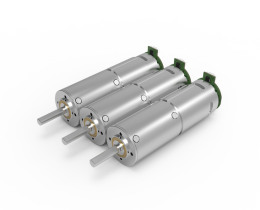


Looking for a suitable motor?

小编
Published2025-10-15
In the rapidly evolving landscape of automation and robotics, servo motors stand out as the cornerstone of precision motion control. Whether you're designing a robotic arm, CNC machine, or automated conveyor, the ability to accurately control a servo motor determines the success and efficiency of the entire system. But what sets the best systems apart isn't just the hardware—it's the control techniques employed to harness the full potential of these compact yet powerful devices.
.webp)
The servo motor catalog is vast, offering a range of options tailored to different applications—each with its own specifications, such as torque, speed, and size. However, selecting the right servo motor is only part of the equation. The control strategy you adopt significantly influences responsiveness, stability, and accuracy. This article aims to navigate through the array of control techniques, shedding light on how they optimize servo motor performance.
Understanding Servo Control Basics
Before delving into advanced control methods, it's important to grasp the fundamental principles. A servo motor operates on the core concept of feedback control. It receives a command signal—often a voltage or current—that indicates the desired position, speed, or torque. The motor's internal sensor, such as an encoder or resolver, provides real-time feedback on its actual state. The control system compares the feedback with the command and adjusts the input accordingly, minimizing any error.
The classic control approach in servo systems is the Proportional-Integral-Derivative (PID) control. PID controllers calculate corrective signals based on current error (proportional), accumulated error over time (integral), and rate of change of error (derivative). This method balances responsiveness with stability, providing smooth and accurate motion.
Limitations of Traditional PID Control
While PID control is widely used and effective for many systems, it encounters challenges when faced with complex or highly dynamic scenarios. For example, in systems with nonlinearities, disturbances, or variable loads, PID controllers might struggle to maintain optimal performance. Tuning PID parameters becomes critical but can be arduous, especially when systems change over time.
Moreover, PID control may introduce overshoot, oscillations, or sluggish response if not properly configured. To push beyond these limitations, engineers turn to more advanced control techniques that enhance accuracy, robustness, and adaptability.
Advanced Control Techniques Explored in Servo Motor Catalogs
Model Predictive Control (MPC): MPC uses a mathematical model of the servo system to forecast future behavior. It optimizes control inputs over a prediction horizon, taking into account constraints and disturbances. This approach excels in complex environments, such as multi-axis systems or where precise trajectory tracking is required.
Sliding Mode Control (SMC): Known for robustness against parameter variations and disturbances, SMC forces the system state to slide along a predefined surface, ensuring stability. This control method is particularly effective in applications where reliability is critical despite external disturbances or component variations.
Adaptive Control: Adaptive systems automatically adjust their control parameters in real time, responding to changing dynamics. For servo motors with variable loads or aging components, adaptive control maintains performance without manual retuning.
Fuzzy Logic Control: Mimicking human reasoning, fuzzy control systems handle uncertainties and nonlinearities gracefully. They are useful in applications where precise mathematical models are difficult to develop.
Neural Network Control: Incorporating AI techniques, neural networks learn from the system’s behavior to enhance control accuracy. While more complex to implement, they hold promise for adaptive, high-performance control systems.
Practical Implementation and Choice of Control Techniques
In selecting an appropriate control strategy, considerations include the application's dynamic requirements, environmental disturbances, cost constraints, and system complexity. For simple, position-centric tasks, PID may suffice, especially with well-tuned gains. However, as precision demands increase, or environments become unpredictable, advanced techniques like MPC or SMC can make a significant difference.
Many servo motor catalogs now offer integrated control options—such as intelligent drives with built-in algorithms—that provide plug-and-play solutions for different control techniques. Choosing from these options simplifies design and accelerates deployment.
Integration of Control Techniques with Servo Motor Catalogs
Today's servo motor catalogs are not static lists but dynamic references to a wide array of control capabilities. Some catalogs highlight motors compatible with sophisticated control algorithms, enabling seamless integration into complex systems. These catalogs often include detailed specifications about:
Compatibility with digital or analog control signals Built-in advanced control algorithms Connectivity features for remote monitoring and parameter tuning Support for IoT-enabled predictive maintenance
By selecting servo motors with the right control features, engineers can significantly reduce development time and enhance system robustness. For example, a servo drive embedded with adaptive control can automatically compensate for load changes, maintaining high precision without manual intervention.
Future Trends in Control Techniques and Servo Motor Catalogs
The field of servo control is continually evolving, driven by advancements in computational power and artificial intelligence. The integration of machine learning algorithms into control systems promises even greater adaptability and efficiency. Moreover, the development of smarter servo motor catalogs—featuring real-time diagnostics, predictive analytics, and modular control options—will further empower users to optimize performance.
In addition, as industries pivot toward Industry 4.0, interoperable and networked servo systems will become standard. These systems will leverage sophisticated control techniques, cloud-based analytics, and big data to achieve unprecedented levels of precision and reliability.
Mastering control techniques is essential in unlocking the full potential of servo motors, whether you're aiming for millimeter-level accuracy or robust performance in harsh conditions. From traditional PID controllers to cutting-edge model predictive and fuzzy logic controls, each approach offers unique advantages suited to different applications. When combined with a well-chosen servo motor from an advanced catalog, these control strategies enable engineers to push the boundaries of automation, precision, and efficiency.
Building upon the foundation of control techniques, the practical implementation in the context of servo motor catalogs unveils a spectrum of opportunities for innovation. The trend toward intelligent, integrated systems is reshaping the landscape, making it easier than ever to deploy high-performance servo solutions in diverse industries—ranging from manufacturing and aerospace to medical devices and consumer electronics.
Role of Digital and Smart Servo Drives
Historically, servo systems relied on analog control signals, which limited flexibility and diagnostic capabilities. Today, digital servo drives with embedded control algorithms have revolutionized the field. These drives can accommodate multiple control techniques—PID, MPC, SMC, and more—offering customizable solutions tailored to specific applications.
Servo motor catalogs now feature drives equipped with user-friendly interfaces, enabling engineers to fine-tune control parameters without deep technical expertise. These intelligent drives often include:
Auto-tuning features: Automatically optimize control parameters for the specific motor and load conditions. Built-in diagnostics: Detect faults, overcurrent, or overheating to enhance operational safety. Remote monitoring: Allow real-time data acquisition and system adjustments via Ethernet, Wi-Fi, or industrial protocols. Firmware updates: Support new control algorithms and features as they emerge.
The integration of control techniques into these digital drives simplifies system design, reduces commissioning time, and enhances overall reliability.
Customizing Control Strategies for Specific Applications
Different industries and applications have unique motion control needs. Here are some tailored approaches:
High-Precision Manufacturing For CNC machines or semiconductor fabrication, demand for micron-level accuracy necessitates advanced control techniques like MPC combined with high-resolution encoders. These systems benefit from predictive algorithms that ensure smooth acceleration profiles and minimize positional errors.
Robotics and Automation Robots require multi-axis coordination, rapid response, and robustness. Sliding Mode Control, known for its resilience, can be integrated alongside adaptive algorithms to maintain stability across varying payloads and environments.
Aerospace and Defense Safety-critical applications demand fail-safe and highly reliable control. Here, redundant control systems utilizing fuzzy logic and neural networks enhance fault tolerance and predictive maintenance.
Medical Devices Precision and smoothness are paramount. Using intelligent drives that incorporate multiple control modes allows for gentle, accurate movements crucial for procedures like robotic surgery.
Advances in Sensor Technology and Feedback Systems
The accuracy of control techniques depends heavily on feedback devices like encoders, resolvers, and linear sensors. High-resolution, multi-channel feedback systems increase the fidelity of the control loop, enabling the implementation of sophisticated algorithms.
Servo motor catalogs now specify compatibility with state-of-the-art sensors, and some offer integrated sensor packages. Additionally, new sensor technologies such as optical encoders or magnetic sensors provide higher sampling rates and better noise immunity, further stabilizing control performance.
The Rise of AI and Machine Learning in Control Systems
Artificial intelligence is no longer confined to data analysis; it's increasingly embedded into control loops. Machine learning algorithms can learn from operational data to optimize control parameters dynamically, predict system faults, or adapt to environmental changes on the fly.
Servo drives with AI capabilities can:
Fine-tune control parameters in real time Predict component failures before they happen Optimize energy consumption based on usage patterns Enhance fault detection and self-healing mechanisms
Integrating these intelligent capabilities into servo motor catalogs transforms them from simple components into smart, adaptive systems.
Designing for Scalability and Modularity
The trend toward modular controllers and servo motors allows system designers to build scalable solutions. Starting with basic control strategies, additional features—such as advanced algorithms, sensors, and diagnostics—can be integrated later as needs evolve.
Manufacturers now offer flexible hardware platforms where control techniques can be upgraded through firmware or software. This modularity means your servo system can adapt to future technological developments without complete hardware overhaul.
Emerging Standards and Interoperability
As the ecosystem becomes more connected, adherence to industry standards—like EtherCAT, Ethernet/IP, and PROFINET—becomes critical. These protocols facilitate seamless integration of servo motors with control systems, enabling multi-vendor interoperability and centralized management.
Servo motor catalogs increasingly list compatible controllers and drives supporting these standards, simplifying system integration and future-proofing investments.
Sustainable and Energy-Efficient Control
With sustainability in mind, control techniques that enhance efficiency are gaining prominence. Precise control reduces unnecessary energy expenditure, minimizes heat dissipation, and prolongs component lifespan. Techniques like regenerative braking, sensorless control, and optimized acceleration profiles contribute to greener operation.
Eco-conscious designs also consider material choices, manufacturing processes, and end-of-life recycling—complementing the technical advances in control strategies.
The synergy between sophisticated control techniques and a rich selection of servo motors in catalogs is transforming automation. By leveraging modern algorithms—be it PID, MPC, adaptive, or AI-driven—and pairing them with intelligent drives and high-fidelity sensors, engineers can craft systems that are not only precise but also robust, adaptable, and future-ready. The ongoing evolution promises a fascinating landscape where technological innovation continues to push the boundaries of what's possible with servo motor control.
Whether you're an industry veteran or just beginning your journey into automation, understanding and harnessing these control techniques opens doors to designing smarter, more efficient machinery—bringing your visions to life with accuracy and confidence.
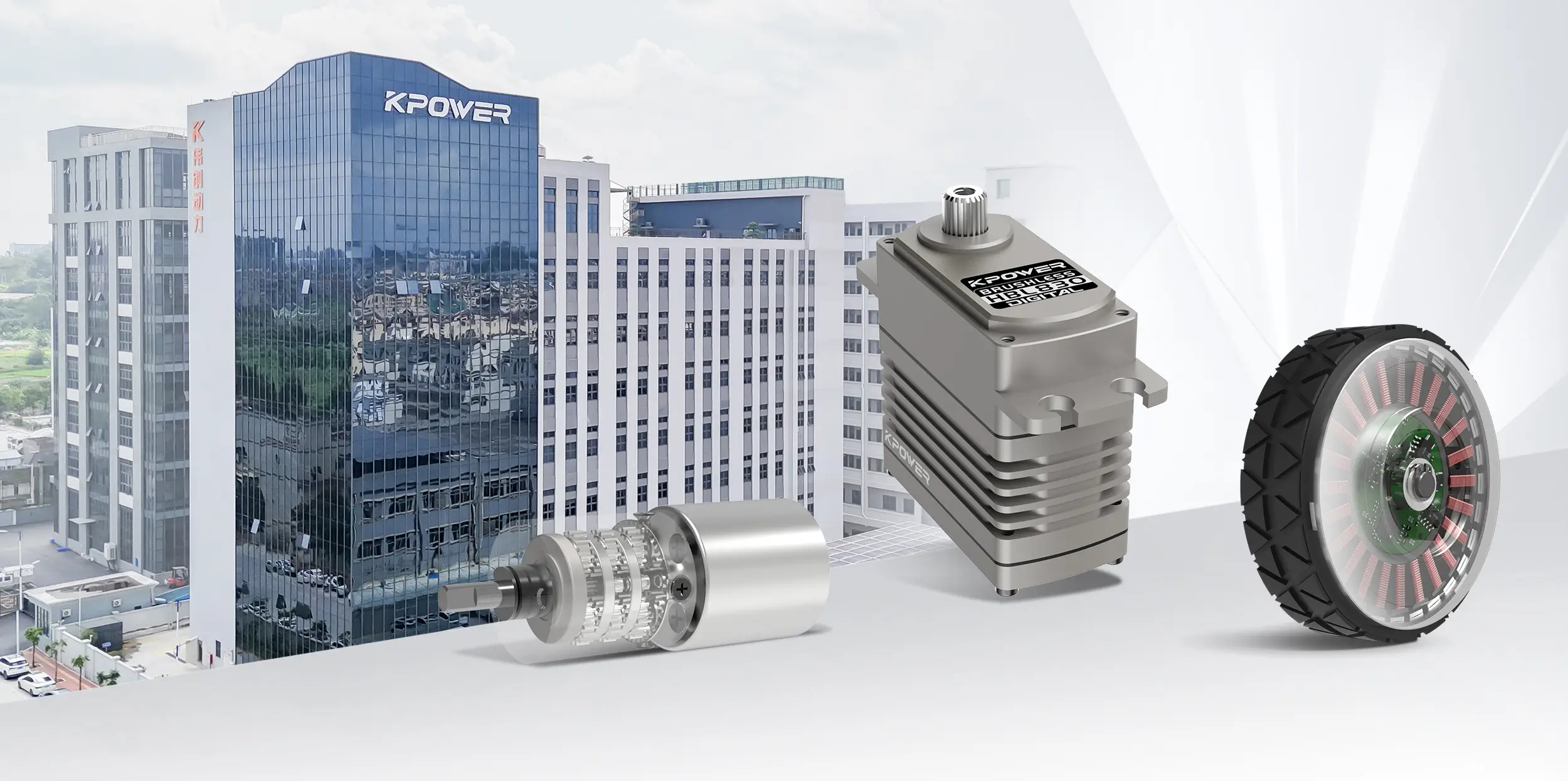
Kpower has delivered professional drive system solutions to over 500 enterprise clients globally with products covering various fields such as Smart Home Systems, Automatic Electronics, Robotics, Precision Agriculture, Drones, and Industrial Automation.
Update:2025-10-15
Contact Kpower's product specialist to recommend suitable motor or gearbox for your product.