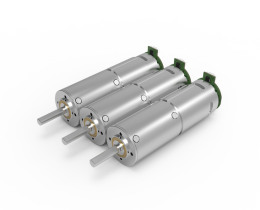


Looking for a suitable motor?

小编
Published2025-10-15
The Foundation of Modern Automation – Understanding Mitsubishi PLC and Servo Motor Integration
In the realm of industrial automation, precision, speed, and reliability aren’t just preferences—they are essentials that dictate the efficiency and quality of production. Among the many components that make up a sophisticated control system, servo motors stand out for their exceptional accuracy and responsiveness. When paired with Mitsubishi PLCs, these motors transform how industries approach task automation, from packaging lines to robotics and CNC machinery.
Why Choose Mitsubishi PLCs for Servo Motor Control?
Mitsubishi Electric has established itself as a leader in automation technology, renowned for reliable, flexible, and scalable solutions. Their PLC systems, like the MELSEC series, are favored because they offer robust programming environments coupled with seamless integration capabilities. Mitsubishi’s servo system components—such as the MR-J4 series—are designed for fast, precise motion control, making them a perfect match for various automation challenges.
Understanding Servo Motors and Their Role
A servo motor is a rotary actuator that allows for precise control of angular position, velocity, and acceleration. Unlike typical motors, servo motors in industrial settings are usually part of a closed-loop control system that continuously monitors and adjusts their operation to meet specific performance criteria.
The core advantage of servo motors is their ability to produce high torque at high speeds, all while maintaining accuracy. This makes them crucial in applications like robotic arms, printing presses, or automated assembly lines where accuracy is paramount.
Connecting the Dots: How PLC and Servo Motors Communication Works
Mitsubishi PLCs communicate with servo drives through a network—most commonly using protocols like SSCNET III/H, Ethernet/IP, or CC-Link IE Field. The PLC acts as the brain, sending position commands, speed instructions, and receiving feedback signals from the servo drive.
The innovation lies in the programmable nature of the PLC—crafting a control strategy that precisely governs the servo motor’s behavior. Imagine a scenario where a robotic arm needs to pick and place items precisely; here, the PLC's program coordinates the servo's movement in real-time, ensuring high speed with pinpoint accuracy.
Programming Foundations: Setting the Stage
Before diving into code, it's vital to grasp the hardware setup:
Servo Drive & Motor: Configured and wired correctly to ensure power, feedback, and command signals flow seamlessly. PLC Setup: Proper I/O modules and communication interfaces are installed. Network Configuration: Establishing communication pathways, ensuring all devices are on compatible protocols, and setting up device addresses.
Once hardware is aligned, the actual software development begins within Mitsubishi’s GX Works3 or GX Developer programming environment. These tools provide user-friendly interfaces filled with libraries, instructions, and tools that demystify motion control programming.
Basic Programming Concepts for Mitsubishi Servo Motors
Mitsubishi provides specific instructions tailored for servo control, such as:
MOV (Move): To command a target position. S-AXIS (Single Axis Control): To control a specific servo axis with more flexibility. CA (Clear Alarm), JP (Jog), and DRV (Drive Reset): For managing drive states and error handling. SDB (Servo Drive Enable): To enable or disable the drive remotely.
In a typical program structure, you'll initialize the servo system, set target positions, monitor actual positions, handle errors, and stop movement safely.
Crafting a Basic Program Flow
Let’s conceptualize a simple motion control program:
Initialization: Reset alarms and enable servo drive. Target Position Setup: Define desired position based on operation. Start Motion: Send move command using MOV or S-AXIS instruction. Monitor Feedback: Continuously read actual position and status signals. Stop or Repeat: Depending on feedback, decide whether to stop, reset errors, or repeat the cycle.
In the next segment, we'll delve into more complex control strategies, elaborate on error handling, explore speed and acceleration tuning, and discuss real-world troubleshooting tips—all aimed at optimizing the performance of your Mitsubishi servo system.
Advanced Control Strategies and Troubleshooting for Mitsubishi Servo Programming
Building on the foundational knowledge explained earlier, this segment will guide you through more sophisticated programming techniques, delve into tuning parameters, and address common pitfalls, enabling you to harness the full potential of Mitsubishi servo motors in your automation projects.
Fine-Tuning for Precision: Adjusting Parameters
Achieving optimal performance requires more than just simple commands; it involves tuning parameters such as:
P (Proportional gain): Affects the response speed of the servo. I (Integral gain): Focuses on eliminating static errors. D (Derivative gain): Damps overshoot and oscillation.
Mitsubishi servo drives allow engineers to adjust these parameters via dedicated configuration software like MR Configurator. Proper tuning ensures that the servo system responds swiftly and stays stable during operation—vital for high-precision tasks.
Implementing Complex Motion Sequences
Real-world applications often demand synchronized multi-axis movements or complex path trajectories. In Mitsubishi programming, this can be handled through:
Multi-Axis Coordination: Using S-AXIS commands in tandem to synchronize axes. Interpolated Moves: Such as linear or circular interpolation, where multiple axes move in harmony. PLC Logic: Embedding motion commands within ladder logic or structured text to handle conditional sequences, retries, or dynamic position adjustments.
Advanced programming also incorporates motion buffering, allowing pre-planned trajectories to execute smoothly, especially beneficial in production lines needing continuous high-speed operations.
Error Handling and Safety
No system is immune to faults. Mitsubishi PLCs and servo drives come equipped with status signals—like alarms, warnings, and feedback signals—that you must interpret and act upon.
Some common errors include:
Overcurrent or Overvoltage: Indicating electrical issues. Encoder Errors: Loss of position feedback. Overtemperature: Thermal issues in the motor or drive.
A robust program detects these conditions, responds appropriately—such as stopping the servo, sounding alarms, or performing diagnostics—and resets once safe.
For safety-critical applications, incorporating emergency stop inputs and motor braking logic is essential. Implementing fail-safe routines increases both system reliability and operator safety.
Speeding Things Up: Quick Response and High Throughput
Tuning the servo responsiveness involves balancing P, I, D gains and acceleration/deceleration profiles. Selecting higher acceleration rates can reduce cycle times but risks system instability if not tuned properly.
Now, consider the scheduling of commands—batching or queuing multiple movements—so the system doesn’t pause unnecessarily between cycles. Real-time feedback from the servo motor enables dynamic adjustments, ensuring the system adapts to variations or unexpected load changes.
Practical Tips for Seamless Integration
Consistent Wiring and Grounding: Prevent noise interference that can corrupt feedback signals. Dedicated Wiring for Feedback Signals: Ensure reliable encoder signals. Use of Shielded Cables: Particularly for high-frequency signals. Software Backup and Version Control: Maintain safety nets in case of unintended changes.
Real-World Application: Automating a Pick-and-Place Robot
Imagine a robotic arm tasked with assembling tiny electronic components. The control system needs to coordinate multiple servo axes, each meticulously tuned for speed and precision. The PLC programming manages sequences like:
Moving to the pick position. Gripping the component. Moving to the placement point. Releasing the component. Returning to home position.
All of this hinges on accurate servo control, real-time monitoring, and robust error handling to prevent mishaps—each element seamlessly woven into the Mitsubishi programming environment.
Closing Thoughts: Continuous Improvement and Mastery
Mastering servo motor programming isn’t a one-time event. It’s an ongoing process involving:
Regular tuning based on operational feedback. Staying current with firmware updates. Experimenting with new motion strategies to optimize throughput. Ensuring safety standards are always met.
The combination of meticulous programming, thoughtful hardware setup, and vigilant maintenance transforms Mitsubishi PLC and servo systems into powerful engines driving automation success. Whether you’re designing a new manufacturing line or upgrading existing machinery, understanding these principles allows you to push the boundaries of what’s possible.
Kpower has delivered professional drive system solutions to over 500 enterprise clients globally with products covering various fields such as Smart Home Systems, Automatic Electronics, Robotics, Precision Agriculture, Drones, and Industrial Automation.
Update:2025-10-15
Contact Kpower's product specialist to recommend suitable motor or gearbox for your product.