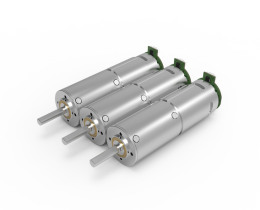


Looking for a suitable motor?

小编
Published2025-10-15
Unlocking Precision and Innovation: The Power of Designing Servo Motors in SolidWorks
In the realm of modern automation and robotics, servo motors occupy a central role, imparting precise control, repetitive accuracy, and robust performance across countless applications—from industrial machinery to consumer electronics. These tiny yet mighty components are the heart of many systems, making their design and development a delicate art intertwined with engineering mastery.

Enter SolidWorks—a powerhouse CAD (Computer-Aided Design) platform that has transformed how engineers approach complex mechanical projects, including the intricate world of servo motors. By leveraging SolidWorks’ comprehensive suite of tools—from detailed 3D modeling to advanced simulation capabilities—designers can create, analyze, and perfect servo motors more effectively than ever before.
Why choose SolidWorks for servo motor design? The answer lies in its versatility, precision, and collaborative capabilities. It provides an intuitive environment where engineers can visualize every component, from the rotor to the stator, with impeccable detail. This visualization is invaluable when trying to understand spatial relationships, electromagnetic compatibility, and thermal behavior—all critical aspects in servo motor efficiency and durability.
The Foundation of Servo Motor Design in SolidWorks
Designing a servo motor begins with conceptual sketches. Engineers translate ideas into basic shapes—cylinders, coils, gears—laying the groundwork for more detailed modeling. In SolidWorks, these sketches can be manipulated with precision, allowing tweaks and iterations that would be cumbersome in manual drafting. This flexibility accelerates the initial phase and fosters innovation.
Once the basic geometry is established, the model evolves into a detailed 3D assembly. SolidWorks’ parametric modeling ensures that changes ripple through the design seamlessly. If adjustments are needed—such as altering the diameter of a coil or repositioning the stator slots—these modifications update across the entire assembly instantly, maintaining design integrity.
Deconstructing the Core Components
A typical servo motor comprises several key parts:
Stator: Stationary part with windings that generate magnetic fields. Rotor: Rotates within the stator, often equipped with magnets or windings. Commutator or brushes: Facilitate electrical connections in certain designs. Gearbox or mounting features: Enable integration into larger systems.
In SolidWorks, each component can be modeled individually with precise dimensions and material properties. Engineers often use cutting planes and cross-sectional views to analyze internal structures, optimizing magnetic flux paths and minimizing losses.
Simulating Electromagnetic Interactions
While SolidWorks is primarily known for mechanical design, its integration with simulation tools—such as SolidWorks Simulation and SolidWorks Electrical—allows for electromagnetic field analysis. Engineers can simulate how the magnetic fields interact within the motor, pinpointing potential inefficiencies or hot spots before physical prototypes are built. This proactive approach saves time and resources, turning theoretical designs into optimized products.
Thermal Analysis and Material Selection
Heat management is vital for servo motors, which often operate under high load and continuous duty cycles. Using SolidWorks’ thermal simulation features, designers can predict temperature distribution within the motor. Such insights inform material choices—like selecting high-grade insulation or heat sinks—and help solve thermal bottlenecks early on.
Designing for Manufacturability
A critical benefit of SolidWorks is its focus on manufacturability. Features like Design for Manufacturability (DFM) checks and tolerance analysis ensure that the designed servo motor aligns with real-world production constraints. Chosen manufacturing processes—like CNC machining or injection molding—are simulated within the CAD environment, reducing costly errors and iterations.
Cross-Disciplinary Collaboration
Designing a servo motor is rarely a solo endeavor. It involves electrical engineers, mechanical designers, and materials specialists. SolidWorks’ platform facilitates collaboration through cloud-based files and integrated communication tools, ensuring all stakeholders stay aligned. This cohesion accelerates development cycles and increases the probability of a successful product launch.
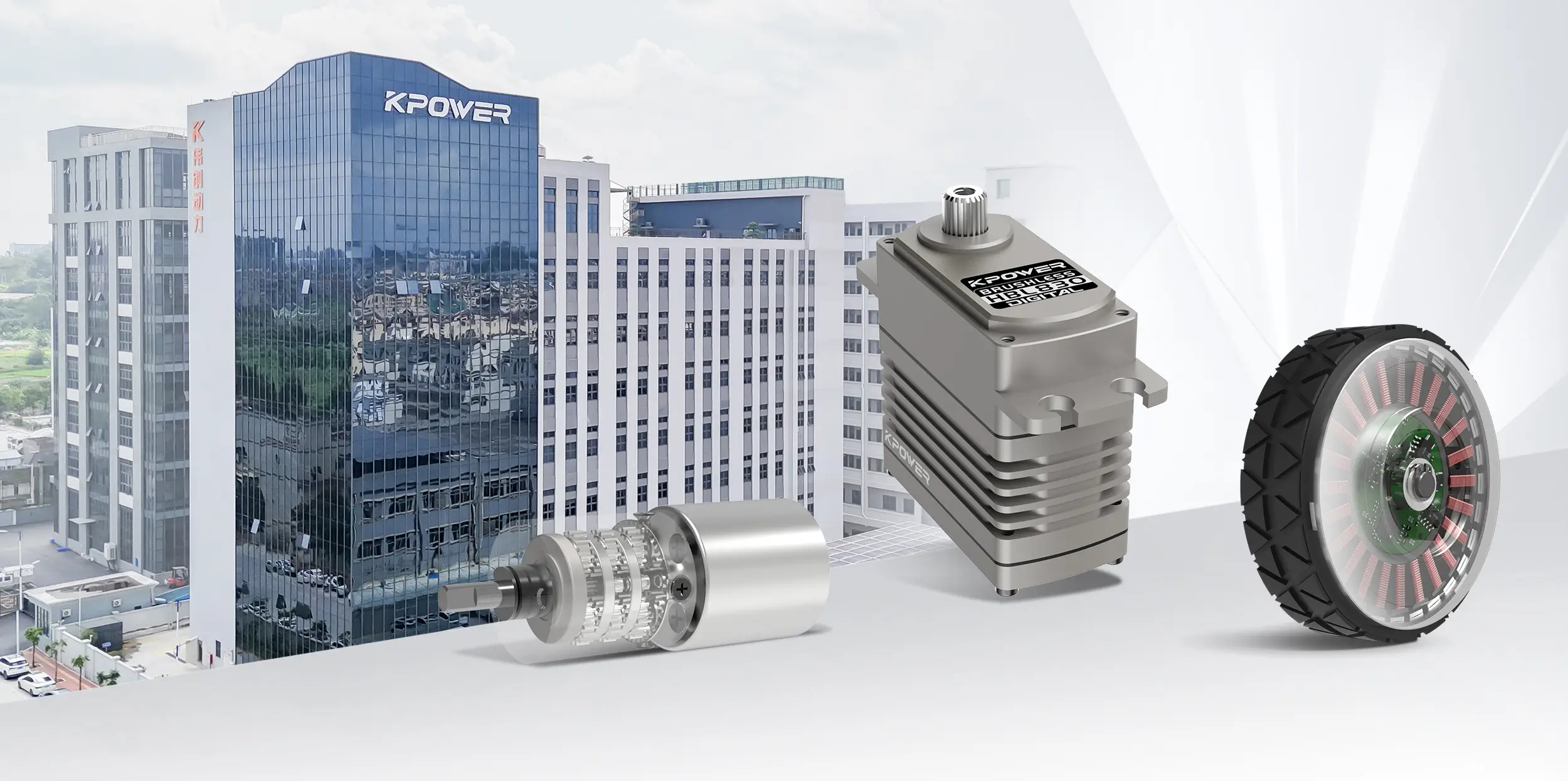
Leveraging innovations in modular drive technology, Kpower integrates high-performance motors, precision reducers, and multi-protocol control systems to provide efficient and customized smart drive system solutions.
Update:2025-10-15
Contact Kpower's product specialist to recommend suitable motor or gearbox for your product.