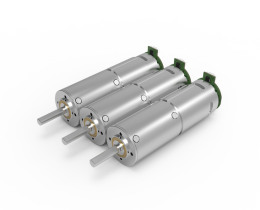


Looking for a suitable motor?

小编
Published2025-10-15
In the fast-evolving world of manufacturing and precision engineering, the quest for perfection has driven innovations that push the boundaries of what machines can achieve. Among these advancements, the integration of servo motors within CNC (Computer Numerical Control) machines stands out as a game-changer—a technological leap that combines intelligence, agility, and unerring accuracy to produce products that meet the highest standards.
But what exactly is a servo motor, and why has it garnered such attention in the realm of CNC machining? To understand its significance, one must first grasp the fundamental role of motors within CNC systems. At its core, a CNC machine is a sophisticated tool that automates complex cutting, milling, drilling, and shaping processes. Its movements depend on precise control over multiple axes—X, Y, Z, and sometimes more—the ability to coordinate these movements seamlessly determines the quality and efficiency of manufacturing.
Traditional CNC systems have historically relied on stepper motors or brushed DC motors to drive these axes. While effective to a degree, these motors often faced limitations in achieving ultra-fine precision, rapid acceleration, and quick reversals without sacrificing accuracy or risking mechanical wear. Enter the servo motor—a type of electric motor designed with built-in feedback systems and advanced control algorithms, which elevates CNC performance to new heights.
A close look at the inner workings of servo motors reveals a blend of elegance and engineering ingenuity. Unlike basic motors, servo motors are equipped with encoders or resolvers that constantly monitor their rotational position, speed, and torque. This real-time feedback enables the motor's drive system to make instantaneous adjustments, ensuring the motor's actual output aligns perfectly with the desired command signals. This loop of continuous communication and correction defines what makes servo motors so powerful.
In essence, servo motors operate as self-correcting, intelligent components that can respond dynamically to the demands of the CNC process. Whether it's executing a delicate engraving or rapidly machining a tough alloy, they adapt to changing conditions with remarkable finesse.
A key factor contributing to the rising prominence of servo motors in CNC applications is their ability to provide superior positioning accuracy. Unlike stepper motors, which rely on open-loop control that can sometimes lead to missed steps or misalignments, servo motors operate with closed-loop feedback. This means they maintain high positional accuracy even under challenging conditions such as varying load or temperature fluctuations.
Another benefit is their impressive speed and acceleration capabilities. During a manufacturing cycle, the ability to swiftly accelerate and decelerate without losing precision translates into shorter cycle times and increased throughput. For industries like aerospace, automotive, or electronics—where tight tolerances and rapid production are the norm—servo motors contribute significantly to productivity and quality.
Moreover, servo motors can deliver higher torque over a broad range of speeds. This flexibility means CNC machines can handle complex, heavy-duty tasks, such as milling large aluminum blocks or shaping composite materials, with consistent performance. Their dynamic response also makes them suitable for applications requiring intricate contours and detailed surface finishes.
As technological demands continue to escalate, engineers and manufacturers are increasingly favoring servo motor-driven CNC systems, not only because of their performance but also for their energy efficiency. Advanced servo drives incorporate energy-saving features like regenerative braking, which captures excess energy during deceleration and recycles it, reducing operational costs and environmental impact.
Despite their numerous advantages, integrating servo motors into CNC machinery does present challenges—initial costs tend to be higher than traditional motor systems, and the complexity of their control electronics requires specialized knowledge for setup and maintenance. However, the long-term gains in precision, speed, and reliability far outweigh these initial investments, making them a worthwhile upgrade for production lines aiming for excellence.
In the upcoming part, we'll delve into practical applications, the latest innovations in servo motor technology, and future trends shaping the next generation of CNC machines. Whether you're a seasoned engineer, a manufacturing enthusiast, or a business owner considering upgrading your equipment, understanding the pivotal role of servo motors unlocks a world of possibilities in precision manufacturing.
Kpower has delivered professional drive system solutions to over 500 enterprise clients globally with products covering various fields such as Smart Home Systems, Automatic Electronics, Robotics, Precision Agriculture, Drones, and Industrial Automation.
Update:2025-10-15
Contact Kpower's product specialist to recommend suitable motor or gearbox for your product.