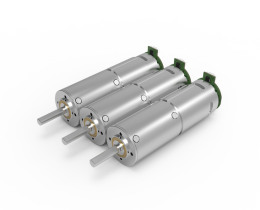


Looking for a suitable motor?

小编
Published2025-10-15
Sure! Here's the first part of the soft article based on the theme "siemens servo motor 3d model," formatted according to your specifications. I'll deliver Part 2 afterward.

Unlocking Precision and Innovation: The Power of Siemens Servo Motor 3D Models
In the rapidly advancing world of industrial automation and robotics, the heart of seamless motion control lies in powerful, reliable, and precisely engineered servo motors. Among industry leaders, Siemens stands out with its innovative approach to creating sophisticated motion solutions. For engineers, designers, and manufacturers alike, the availability of detailed Siemens servo motor 3D models opens a new universe of possibilities—streamlining design workflows, enhancing predictive maintenance, and fostering technological innovation.
The Rise of 3D Models in Modern Engineering
3D modeling has become indispensable in contemporary engineering. It allows professionals to visualize complex components in a virtual environment before physically manufacturing or implementing them. For Siemens servo motors, detailed 3D models encapsulate every aspect of design—dimensions, materials, mounting points, and internal components—facilitating accurate simulations and integration into larger systems.
Imagine you're designing a robotic arm that requires precise motion control. Using a Siemens servo motor 3D model, you can simulate how the motor interacts with other mechanical parts, check for fit and space constraints, and optimize placement—all digitally. This approach minimizes errors, reduces prototyping costs, and accelerates project timelines.
Why Siemens Servo Motors?
Siemens has earned its reputation through relentless innovation, producing servo motors that excel in performance, efficiency, and durability. Their servo motors are characterized by high torque density, compact design, and advanced control capabilities. These attributes are vital in applications ranging from packaging machinery to autonomous vehicles, medical equipment, and aerospace systems.
The 3D models offered by Siemens embody these qualities, giving engineers an invaluable tool to incorporate precise motor specifications into their CAD (Computer-Aided Design) environments. Whether you're working with SolidWorks, AutoCAD, CATIA, or other CAD software, Siemens provides compatible and detailed models that facilitate seamless integration.
Power of Detailed 3D Models in Design and Simulation
When working with Siemens servo motor 3D models, several benefits come to the forefront:
Accurate Spatial Planning: Ensuring the motor fits perfectly within the designated space, avoiding interferences. Thermal Analysis: Predicting heat dissipation and ensuring efficient cooling pathways. Structural Optimization: Testing different mounting options and structural configurations for maximum stability. Electromagnetic Compatibility: Simulating electromagnetic fields to prevent interference issues.
Moreover, these models often come with parametric features, allowing users to modify specifications—such as torque ratings, dimensions, or number of poles—to suit their specific needs.
Common Features and Parts of Siemens Servo Motor 3D Models
A comprehensive Siemens servo motor 3D model typically includes:
Exterior Enclosure: Detailed shell, mounting flanges, and fixing points. Internal Components: Rotor, stator, bearings, and wiring pathways, often shown with transparent settings for educational visualization. Connectors and Cables: Power supply inputs, feedback sensors (like encoders), and communication ports. Material Properties and Finishes: Information on surface treatments, protective coatings, and thermal insulators.
Such comprehensive models assist manufacturers in ensuring compatibility with other system components, avoid assembly errors, and facilitate maintenance planning.
Applications and Industries Benefiting from Siemens 3D Models
Siemens servo motor 3D models are valuable across diverse sectors, including but not limited to:
Manufacturing Automation: Robotics, CNC machines, conveyor systems. Aerospace and Defense: Precision actuation systems, control surfaces. Healthcare: Medical imaging equipment requiring precise movement. Automotive: Robotic assembly lines and testing rigs.
In each of these domains, detailed 3D models streamline the design process, leading to more reliable, efficient, and innovative products.
Accessing and Utilizing Siemens Servo Motor 3D Models
Siemens offers a variety of ways to access their 3D models:
Official Siemens Websites and Online Libraries: Certified models ready for direct download. Partner CAD Platforms: Integration with popular CAD software packages. Custom Model Requests: For specialized projects, Siemens can provide tailored models based on specific motor configurations.
Using these resources, engineers can embed Siemens servo motors directly into their assemblies, run simulations, and make data-driven decisions—saving time and increasing project accuracy.
Once you’re ready, I will proceed with the second part, delving deeper into specific model features, user tips, industry case studies, and future trends in Siemens servo motor modeling.
Kpower has delivered professional drive system solutions to over 500 enterprise clients globally with products covering various fields such as Smart Home Systems, Automatic Electronics, Robotics, Precision Agriculture, Drones, and Industrial Automation.
Update:2025-10-15
Contact Kpower's product specialist to recommend suitable motor or gearbox for your product.